The metaphor of straddling two worlds appears in countless cultures across the globe and often has a preternatural element. Most people are familiar with the notion of mermaids. Less well-known are the Celtic/Norse myths about ‘selkies’ – seals who for a time adopt the appearance of human beings. In such tales, romantic relationships often arose, but not always with happy endings…
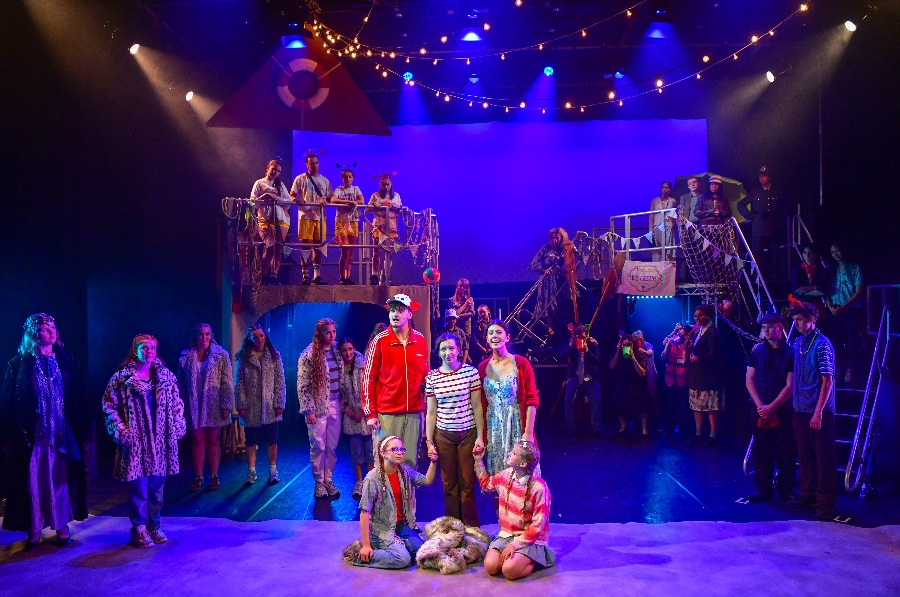
Sea Change is the latest musical from British Youth Musical Theatre. With music composed by Elinor Peregrin and the book, lyrics and direction by Will Jackson, Sea Change could be said to a spiritual successor to Hans Christian Anderson’s original take on The Little Mermaid. The show’s setting of the septennial tidal eclipse marks when the selkies can briefly walk amongst men and experience humanity before they return to the foam and surf.
 The sense of belonging (or not) is an important part of selkie girls’ journey, as it is for Isla (Ella McFetrich) the daughter of the lighthouse keeper who may have to move away from Blackwater Cove, because the building is too expensive to repair. The lighthouse and its relationship with the selkies have a complicated, entwined history and contrary to its purpose, casts a shadow throughout the show.
The residents of Blackwater Cove could be said to be like the chant attributed to the supporters of Millwall F.C.: “No one likes us, we don’t care!” But the inhabitants’ projected suspicion and hostility of outsiders is the flipside of being rejected by neighbouring communities – a ‘chicken and the egg’ scenario, where the cycle ‘can’t’ be broken without external help…
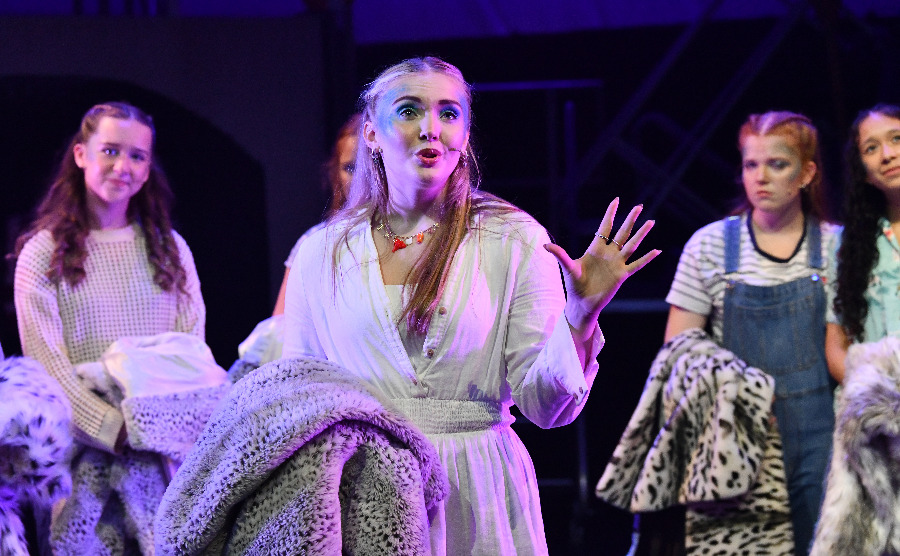
Considering the show’s book touches on some multilayered themes, Sea Change leans hard into levity and the unlikely (but amusing) scenarios that the selkie girls find themselves in. Still, it gets the point across that where one ‘belongs’ (where one’s interests, skills and presence are valued) is not always where one starts out from and that venturing out of one’s comfort zone can be source of positive growth – even if it is to reinforce in one’s mind of what you don’t want in the future. Also, in terms of Ilsa’s ‘existential isolation’ in the insular community, the show has opted to allude to Ilsa’s situation with its parallels with being gay in heteronormative surroundings.
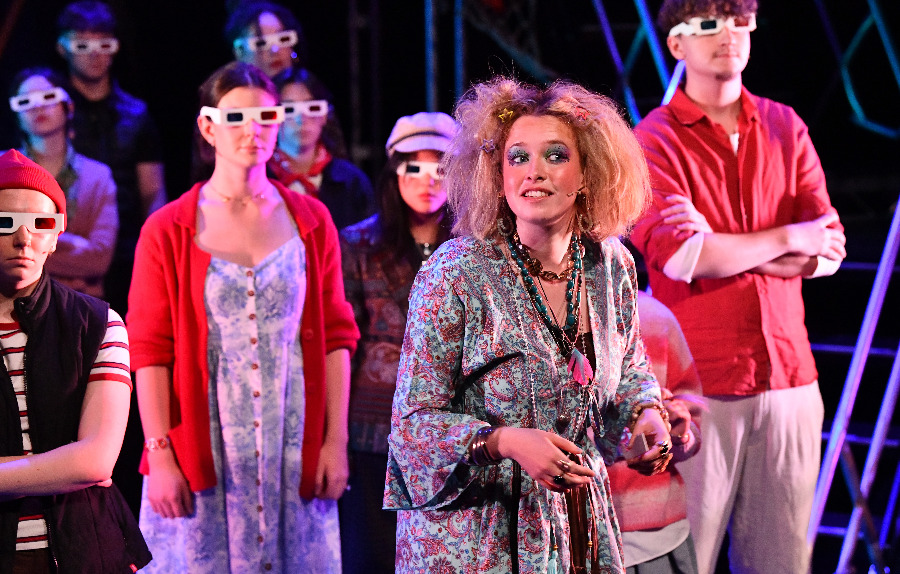
Musically, the show effortlessly taps into a nautical ambience and the perennial nature of the sea. Yet the show also subliminally touches on what’s happening in the UK – especially the coastal towns that frequently have ‘visitors’ – and their response to an uncertain future…
© Michael Davis 2026
Sea Change ran at the Birmingham Hippodrome’s Patrick Studio, from 28th to 30th August.

