Occam’s razor: all things being equal, the correct answer is the simplest. It’s a maxim that’s used in all walks of life, but utilised especially in medical diagnoses. And while TV programmes like House M.D. show diagnostic teams actively looking for ‘zebras’ (rare medical conditions that have result in multi-organ failure), in real life many medical institutions adopt the philosophy that ‘if it looks like a duck, swims like a duck and quacks like a duck, then it probably is a duck.’ With this the case, where does this leave women who are experiencing symptoms that don’t fall into neat categories..?
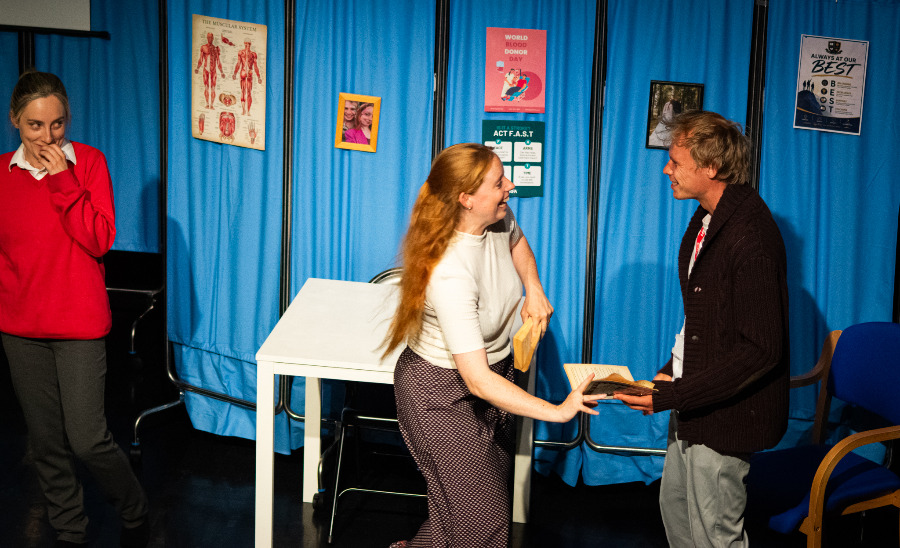
Written by Teepee Productions’ co-founder Tayla Kenyon and directed by Emma Fisher, Tell Me Where It Hurts focuses on a young woman who not only has the unenviable task of living with Premenstrual Dysphoric Disorder (PMDD) – a hormone-based mood disorder characterised by extreme irritability and depression in the weeks before menstruation – she has to also convince a sceptical medical profession that the symptoms she’s experiencing categorically point to only PMDD.
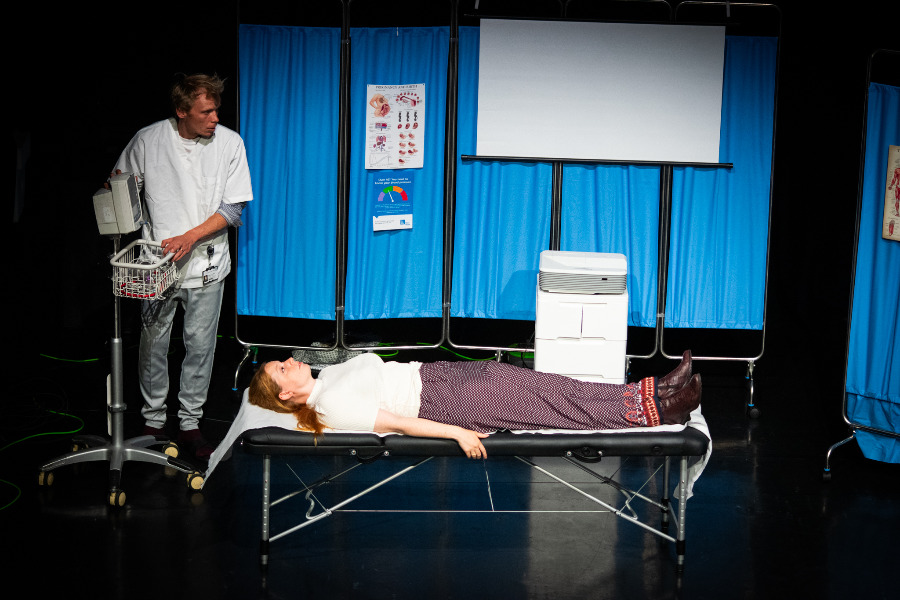
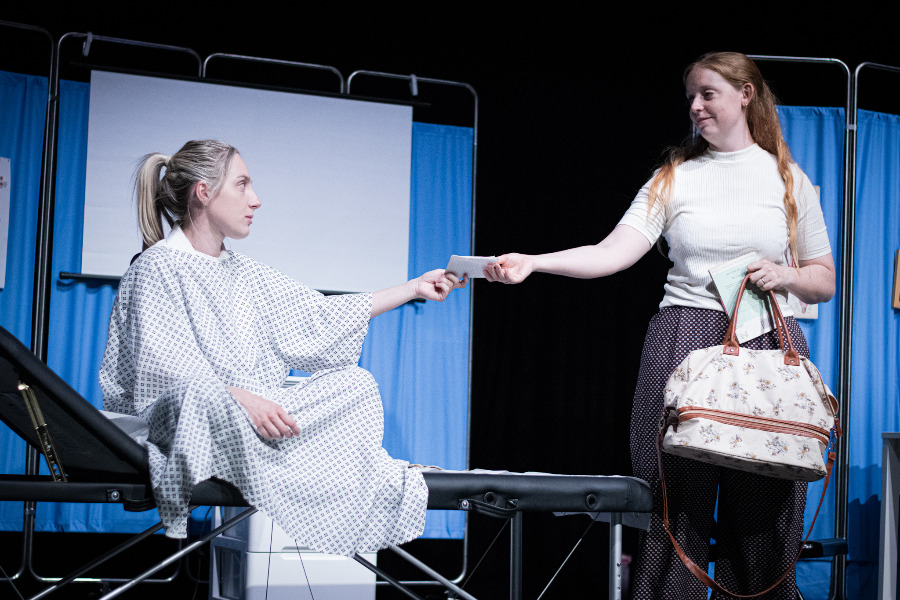
Early on in the play, drama teacher Chrissy (Stephanie Booth) has a medical consultation, prompted by recent events that affected her at work. Chrissy is lucid and erudite, trying to explain candidly and concisely the rationale for her self-diagnosis, after comparing her symptoms over time with online research. But the only thing in Chrissy’s speech that the doctor ‘jumps on’, is her ‘admission’ that at her lowest she ‘may’ have fleetingly thought about suicide. It’s such a pivotal scene, as we see how Chrissy can be hypersensitive to aural stimuli and her other symptoms could be diagnosed as ‘abnormal yet explainable’… And while the ‘disinterested’ attitude of the health professional talking to Chrissy is deplorable, if we ‘play devil’s advocate’, the symptoms that Chrissy ascribes to PMDD ‘could also be explained to a lesser degree’ with conventional diagnoses. Certainly in Chrissy’s case, there are parallels to people years ago who were suffering from M.E. (Myalgic Encephalomyelitis – also known as Chronic Fatigue Syndrome) who were not taken seriously because of ‘the lack of’ empirical exterior evidence.
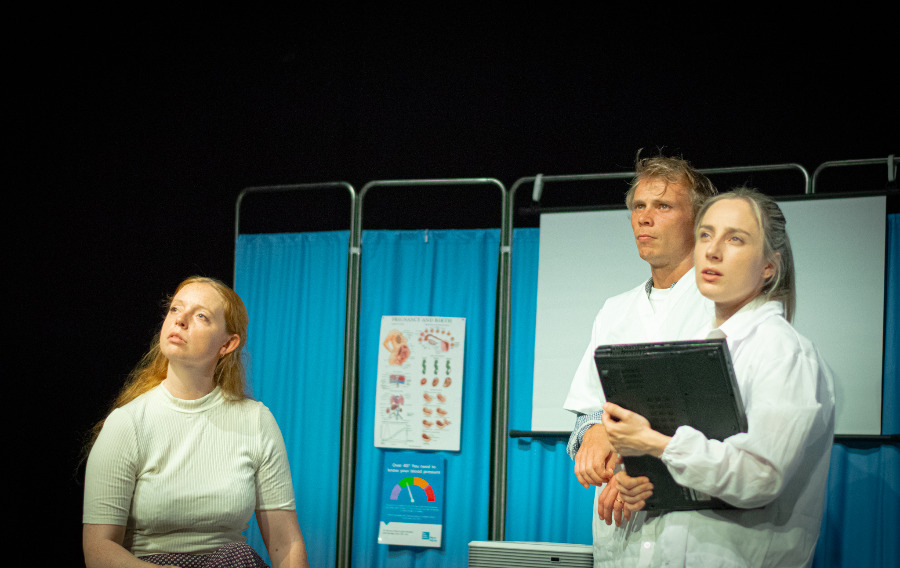
Another symptom Chrissy experiences that is arguably more ‘problematic’ in the long run, is losing her sense to gauge time. For the population at large, there are many explanations for this phenomenon, but none of them bode well. At one end of the spectrum, neurological conditions such as ADHD (attention deficit hyperactivity disorder), autism and dementia all correlate with this, while at the other end of the spectrum, there are factors such as sleep deprivation, anxiety and depression, plus trauma and chronic stress. Any one of these reasons is disconcerting, but taken in conjunction with temporary but cyclical extreme moods, it doesn’t take a physician to figure out that what Chrissy’s experiencing is seriously ‘off’. But I digress.
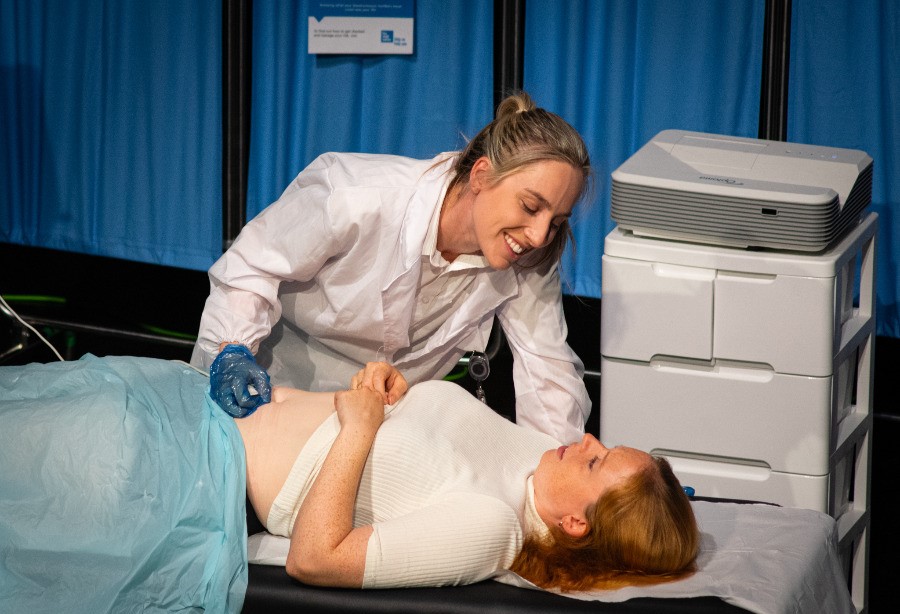
But if Chrissy seems to have the monopoly on ‘problems’ in the play, the introduction of her husband Nathan and his predilection for only wearing ‘slider’ footwear on all occasions marks him down as ‘on the spectrum’ – ‘quirky’ and ‘harmless’, but still ‘on the spectrum’. Performed by James Schofield (who also played the doctor and the head of year at school), the male characters in the play have a ‘similar vibe’ in that behind the platitudes, regardless of what is said, there is less than 100% support for Chrissy and are not ‘present in mind’ when she’s trying to have a meaningful conversation with them. The irony is Nathan’s ‘quirk’ is visible for all to see, but no one says anything about it, while Chrissy’s ailment is the inverse of this.
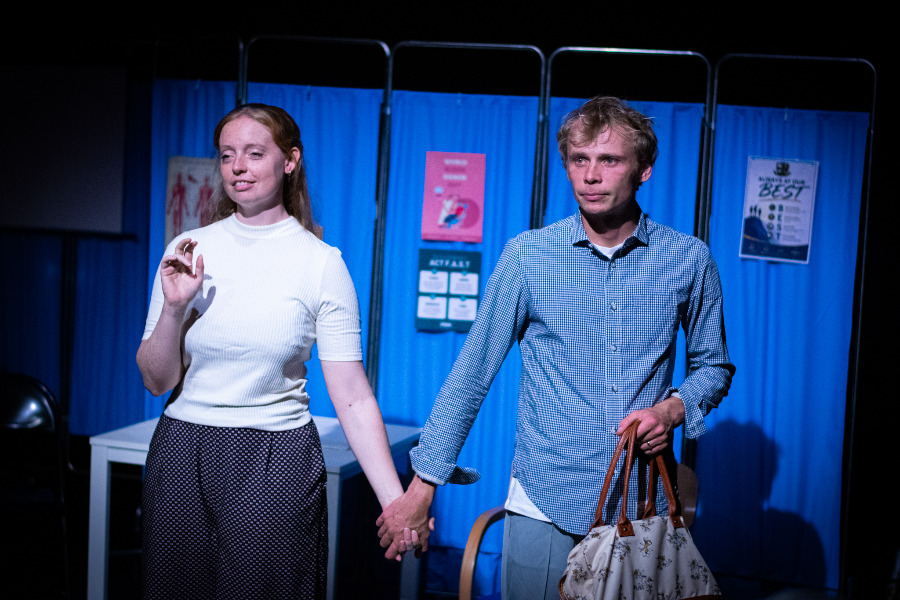
But life doesn’t give Chrissy the ‘luxury’ of brooding while she’s dealing with her cyclical hormonal irregularities. Not while she has to help Annie (Tayla Kenyon) get into drama school. As a counterpoint to Chrissy’s neurological disorder, we have Annie who potentially has ADHD and seemingly has limitless energy. But beyond her effusive self-confidence lies some who has her own cross to bear with regards to events in her family’s past, which have a way of making themselves felt in the present. At one point I thought Kenyon/Annie was paying homage to Lillian Hellman’s The Children’s Hour with one incident, but it’s a more well-known play that Tell Me Where It Hurts has a natural synergy with…
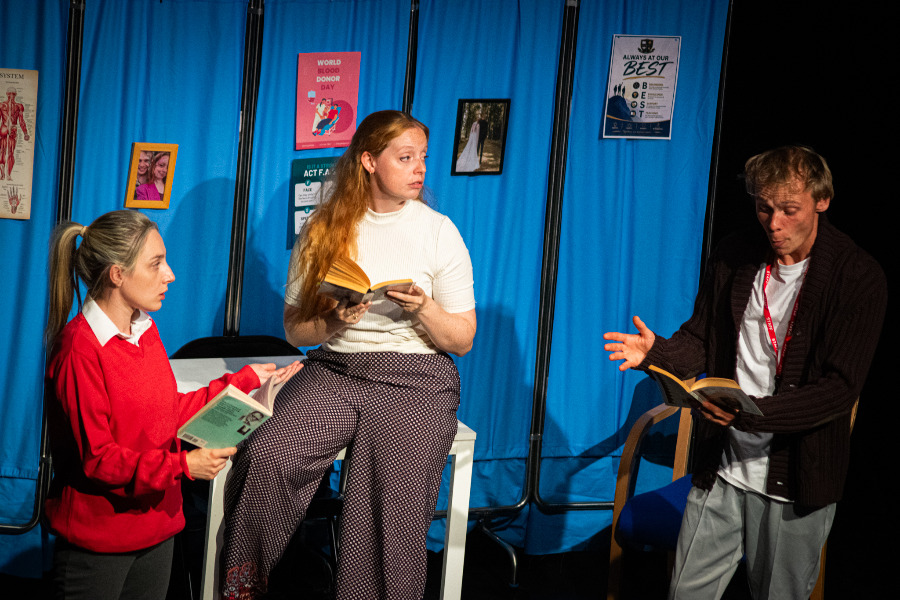
As the author of Tell Me Where It Hurts, Kenyon deftly intertwines it with the themes of Arthur Miller’s The Crucible (present as Annie’s rehearsal text). But instead of the fear of witchcraft infecting the community, in today’s world, there is the stigma from both health professionals and the general public of dealing with poor mental health and neurological disorders. In other words, meeting the criteria for the state sectioning you.
But as the layers of Annie’s past are slowly revealed, it gives Chrissy pause for thought regarding not only her health, but also potentially starting a family with Nathan. If you knew you had a neurological disorder that would almost certainly be passed on to any children you have, wouldn’t you at least consider foregoing being a parent to spare your children having the same psychological hardships?
One minor detail that Kenyon adds to the play is Nathan’s wish to be a comedian. On the surface, it isn’t really of ‘monumental importance’ and it is amusing to think that Nathan’s ambitions lie in thinking up jokes. But if we consider that a) many of the best comedians point out the absurdities in modern living and that b) this requires observational skills and a degree of self-awareness Nathan doesn’t possess, it’s just as well that he only pursues the most rudimentary form of humour. Then again, not looking too deeply at developments in his life has helped Nathan avoid certain truths that are staring him in the face…

As a gateway to addressing PMDD, Tell Me Where It Hurts fulfils the dual purpose of educating the audience about the issues that arise when PMDD is recognised/diagnosed, as well demonstrating how one ‘copes’ when adversity permeates one’s private and public sphere.
Asides from accentuating the progress that still needs to be made regarding women-specific health issues, both Chrissy’s and Annie’s character arcs remind us (in the words of the late-Robin Williams) that “Everyone you meet is fighting a battle you know nothing about. Be kind. Always.”
© Michael Davis 2026

Tell Me Where It Hurts ran at the Blue Orange Theatre on 26th and 27th July as part of Birmingham Fest. It will continue its tour at the following venues/dates:
23rd September: Gatehouse Theatre, Stafford.
24th September: Arena Theatre, Wolverhampton.
27th September: Old Town Hall, Hemel Hempstead.
8th October: The Courtyard, Hereford.
13th October: Luton Library.
 Breaking The Fourth Wall