“This is a story of a woman. Of women. Stories from a times supposedly different from ours. Myths, that may or may not have happened. Depending on who you choose to listen to.”
The Ancient Greeks knew a thing or two about the human condition. While it wasn’t a gynocentric culture, its observations about men and women have served as the archetypal templates for psychology and other social sciences. With this in mind, Echoes – Lieve de Putter’s latest play – looks at the feminine archetypes in Classicist literature, and draw parallels between them and women in contemporary society.
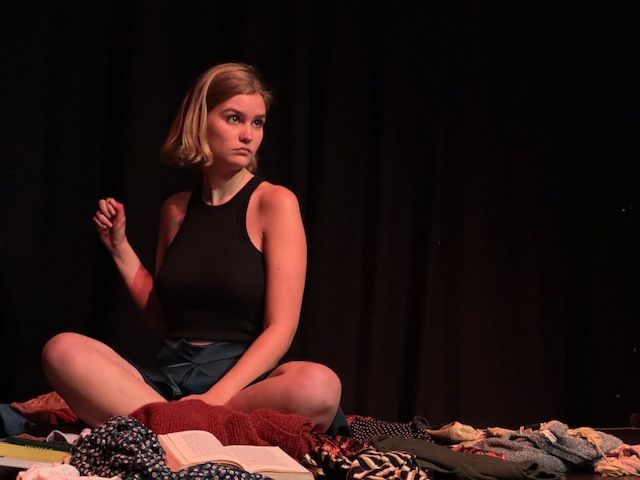
For context, the myths of Ancient Greek/Roman culture conform to Émile Durkheim’s notion that the gods were created in Man’s image and that far from adhering to a higher form of moral conduct, they exhibited the same foibles that ‘ordinary’ people have. In terms of the central women and men in particular stories, it wasn’t just the mythological monsters they had to face – it was the ‘higher authorities’ they had to contend with that were impervious to brawn or powers of persuasion. But I’ll come back to this later.
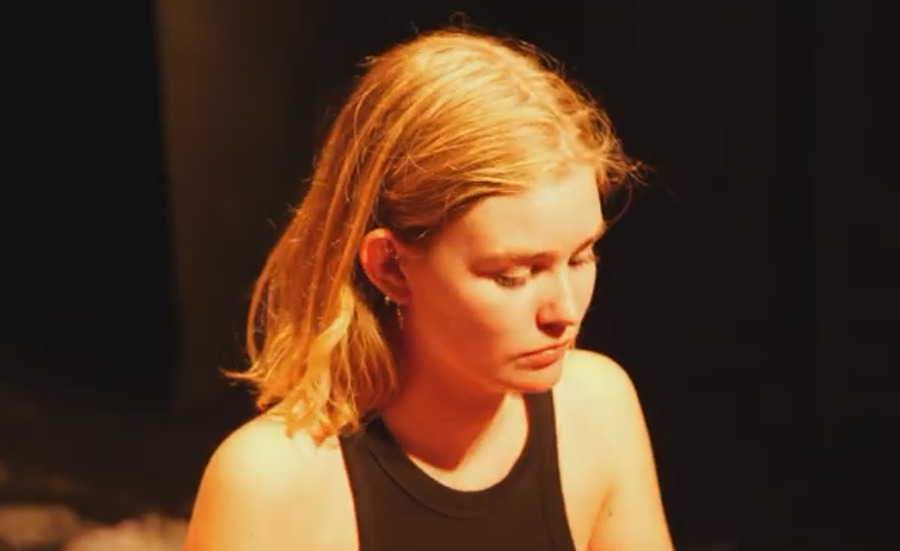
Echoes isn’t a play with a concise beginning, middle and end. Rather, it weaves the experiences of a young modern woman with Greek tragedies in form of a stream of consciousness. The metaphor of the voiceless woman (without a tongue) is set up from the very beginning, as it segues into the modern woman’s experience in a newsroom. Highlighting an inspection report about how the office doesn’t conform to non-chauvinist etiquette, de Putter’s protagonist immediately feels ‘judgment’ from her boss and not-so-subtle hostility.
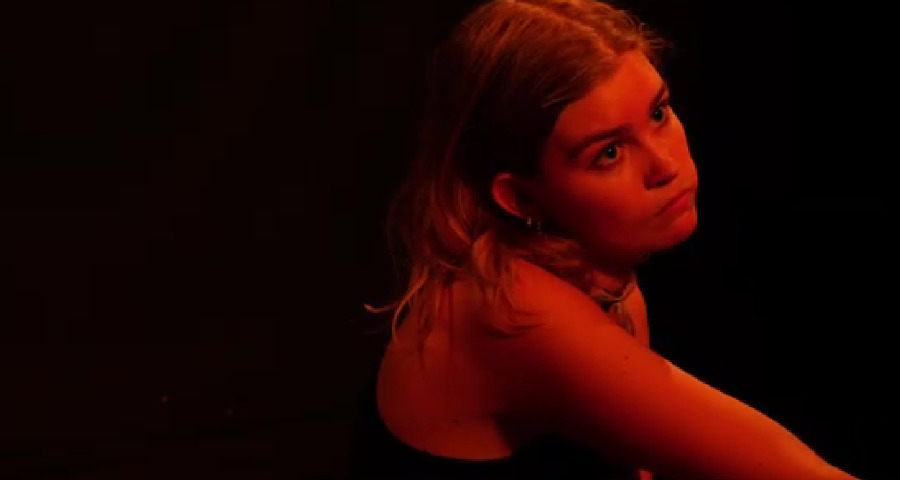
But beyond the workspace, de Putter’s ‘everywoman’ has to navigate her own internalised, policed responses – especially when dating. Even before she has left her home, de Putter’s character weighs up what her choice of clothes subliminally says about the sort of person she is and what signals/vibes she wants to give off. De Putter at this point adopts the ‘Echo’ persona, who in Greek mythology, was a mountain nymph who cursed to only be able to repeat what someone else has said. From the off, we hear her date’s opinions on women.
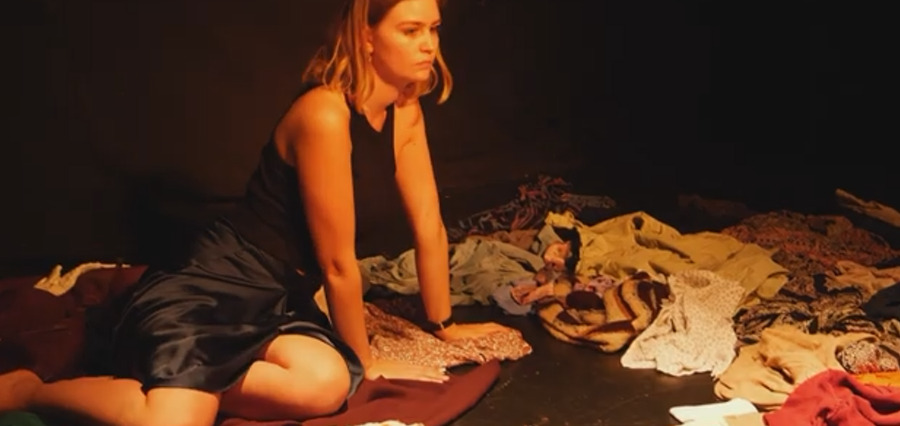
But as ‘Echo’ is unable to say her thoughts and opinions directly, we – the audience – are able to pick up via her facial expressions and inflection what the character thinks/feels. De Putter is very good at inserting subtle moments of insight, humour and non-verbal communication.

At the beginning of the play, there is a male ‘narrator’ that talks over de Putter’s own narration of what she is doing or about to do. The male narrator’s choice of words are ‘subjective’ with occasional sensual undertones, but it’s not something challenged by de Putter until much later on. While de Putter’s response repudiates the ‘male gaze’, in a general sense, there is often a disconnect between how we see ourselves versus the interpretation of our actions by others.
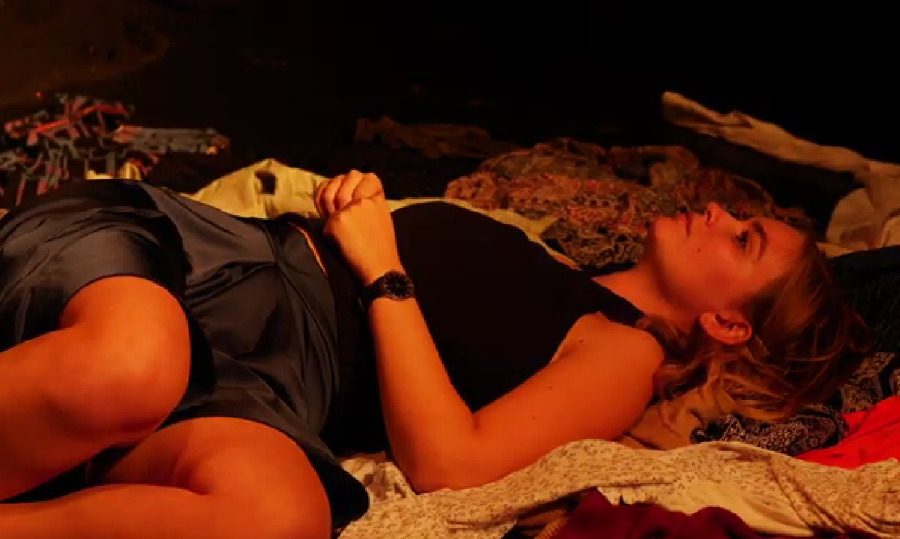
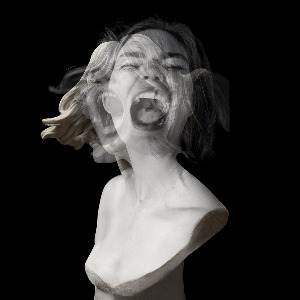
One of the female mythical figures that has a perennial relevance is Cassandra. Given the gift of prophecy by the god Apollo, her ‘curse’ is that nobody believes her. The allusions to this and being a woman is made, but if we look at ‘prophets’ in cultures the world over, they are never revered within their own lifetimes, as their messages – their warnings – are unpalatable to the status quo. In any case, du Putter’s Cassandra still has men who ‘control’ the interpretation of her visions, as the insights from a ‘loud’ and ‘vocal’ woman are not to be trusted. This relates to other parts of the show, that hint at ‘modesty in speech’ in women equates to modesty in attire.
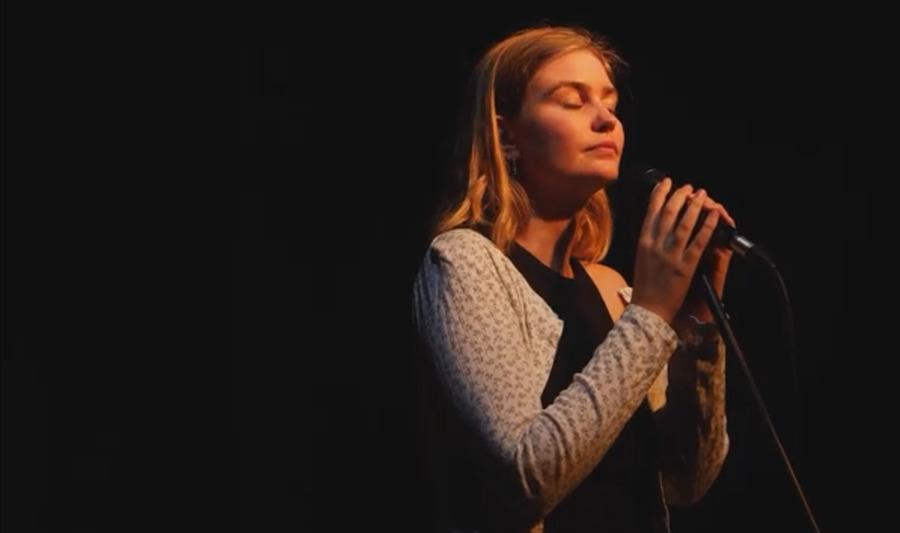
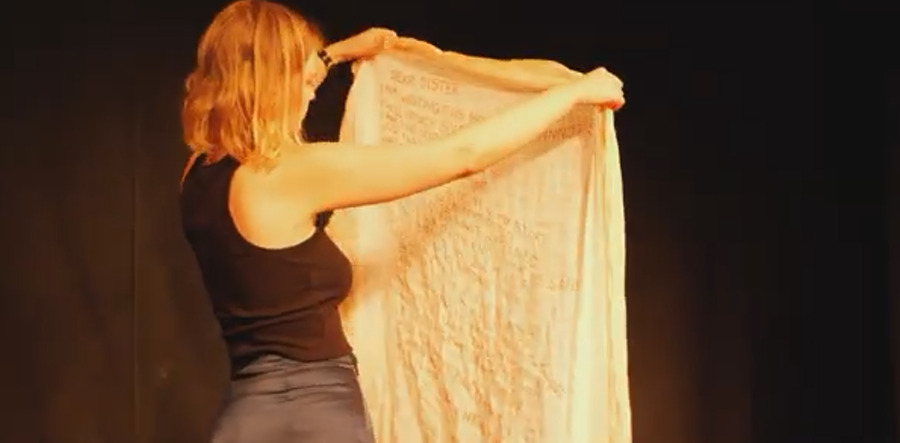
But circling back to the metaphor of the tongueless woman, the example de Putter refers to on more than one occasion is the story of Philomela. While people may be more familiar with Lavinia in Shakespeare’s Titus Andronicus as a more extreme example of sexual violence befalling a silenced woman, Philomela was an Athenian princess who was raped by her brother-in-law and her tongue then severed so she couldn’t speak of it. But that didn’t stop her from weaving her tale of woe within a tapestry and sending it to her sister, Procne. This brings us to the subject of justice versus vengeance. Within Greek tragedies, the search for justice in an unjust world is a perennial quest. But choosing “an eye for an eye” leads to a never-ending circle of violence, no chance for restorative justice to take root.
In general, there is a danger – especially with Greek/Roman myths – to use their iconography or lexicon to state categorically that *this* is what the myth or ‘truth’ is, but the omission of details reframes the narrative so that it is incomplete. If we look at the myths of Cassandra, Echo and Arachne outside of this show in their entirety, they hint that there is ‘blame enough for everybody’. Cassandra’s gift of prophecy from Apollo wasn’t given freely without nothing expected in return. He didn’t give it ‘out of the goodness of his heart’, but requested to ‘know her’ and she refused. Many years later after Troy, Cassandra was taken as ‘the spoils of war’ by King Agamemnon and killed by wife Clytemnestra. In the case of Echo, she was cursed by the goddess Hera for protecting her fellow nymphs from her wrath, whereas Hera didn’t have the moxie to confront her husband Zeus directly about his many infidelities. Meanwhile, in the case of Arachne, it was Hera once again who carried out the punishment. While Hera took a ‘Victorian’ view that mortals should know their place and ‘not have ideas above their station’, Arachne spoke ‘truth to power’ and pointed out to Hera that she was ‘powerless’ to stop her husband’s countless affairs.
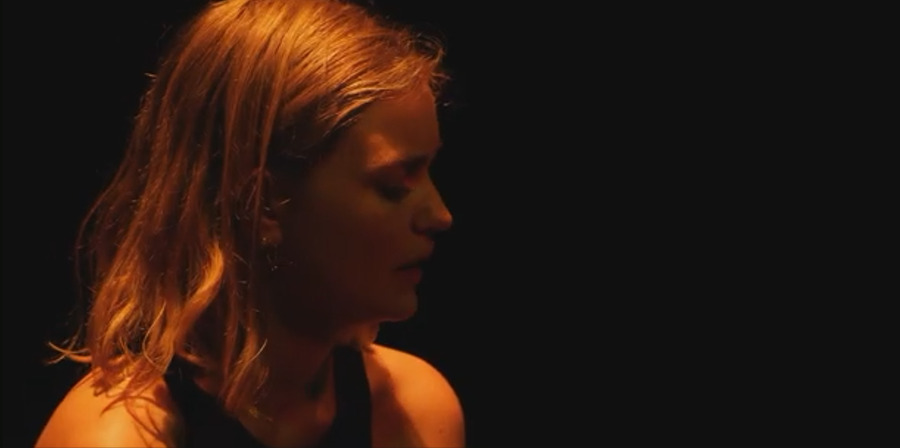
If would be very easy to infer from the Greek myths that the true moral of the tales are women can be other women’s worst enemy, and that women for whom affluence and prestige is everything, they enable (consciously or unconsciously) men who abuse their power, rather than believing all women are ‘in it together’. It could be argued universal female solidarity in these tales are the true myth, but that is an ‘unpalatable truth’.
As I said before, the nuanced Greek myths spread the blame on everyone and to omit details to force a singular narrative of blame does the original myths a disservice. Humans in general are ‘messy’ and are capable of self-sacrifice, as well as the most deplorable actions imaginable. As for Philomela’s sister Drocne who killed her own son because he can talk while her sister can’t – is that justice – to ‘punish’ children/others, but not the guilty parties? When Jason (of Golden Fleece fame) left Medea for a younger woman, was she justified in killing their children? In the light of the Lindsay Clancy case in the headlines, these myths are far from abstract and irrelevant. Care must be taken with appropriating narratives for ‘messages’.
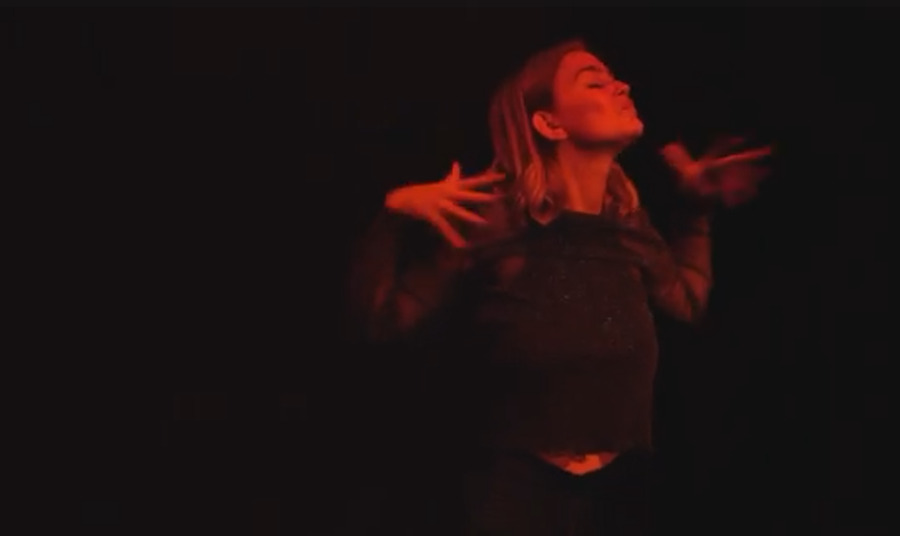
Regardless of all this, de Putter’s Echoes is deft and sensitive in its approach to distilling the myths to the 21st century. I don’t often make a point about talking about the sound design and lighting in a show, but for Echoes, but Tattie Chater Davies’, Emily Rae’s and Haley Sliker’s contributions are integral to the ‘shape’ and ‘feel’ of the narrative. Whether it’s the cool blue hues for Arachne or the earthier reds for Cassandra, there is nothing uniform at a sensory level of the respective retelling of the Greek myths. In the Arachne segment in particular, the percussion Jazz-esque background music subtly hints at the upbeat, rhythmic energy of the weaver’s competitive nature.

While Euripides’ The Trojan Women/Women of Troy isn’t directly addressed by de Putter, the hardships of women during the Trojan War are obliquely referenced through Helen (of Troy’s) experience. Far from being oblivious to the consequences to her actions 10 years ago, she rues the day she ever set eyes on Paris, (who in this incarnation is unequivocally selfishness personified) and still remembers leaving behind her daughter Hermione with Menelaus. While Paris’ depiction here is ‘harsher’ than other famous examples in the past, ‘however you slice it’, the fact that he lets one’s own country suffer a decade of warfare because of his own lust is indicative of sociopathic tendencies with zero empathy for others, so ‘artistic licence’ may be more appropriate here.
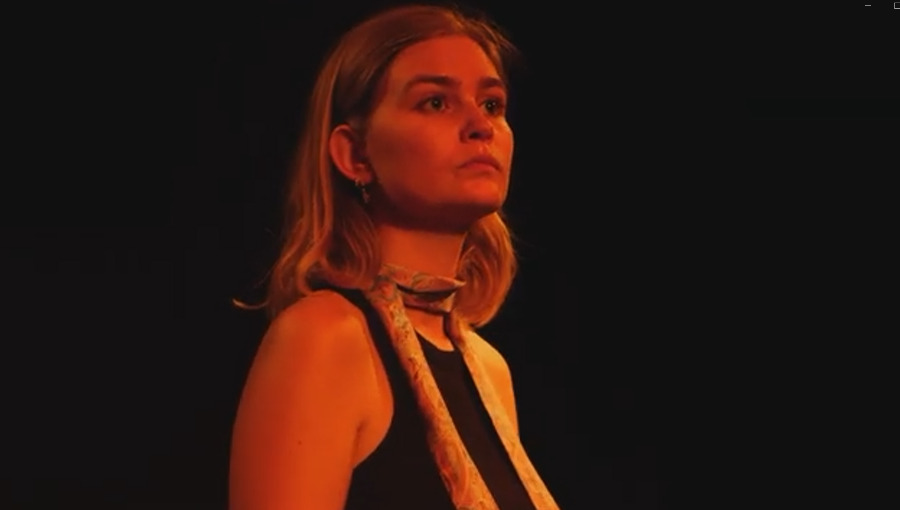
As for the relationships that de Putter’s ‘everywoman’ has in the present day, they are interested in their own right and part of me wishes there were more moments like these in Echoes. While de Putter’s ‘everywoman’ outwardly has positive things to say about an ex-boyfriend and verbally states that’s she’s ok, that she’s “a strong independent woman”, her anecdote about physically falling after he broke up with her ex hints at the toll that abrupt endings to relationships have had on her, especially those that she envisaged having a potential future. The anecdote’s coda of “he that tells the story holds the power” hints at a universal truth about ‘recorded history’ often being a one-sided affair.
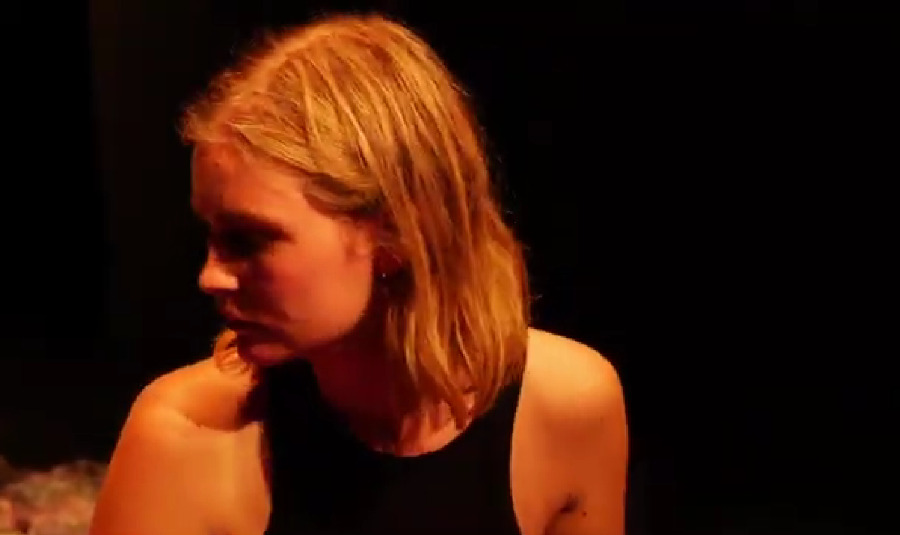
In contrast, the one positive male relationship that is depicted in the show is with ‘everywoman’s’ father. But even their conversation is strained at times, with the father taking umbrage that his daughter potentially thinks “all men are the same” and her opinion of him – “he means well” – indicative they don’t see everything 100% the same way.
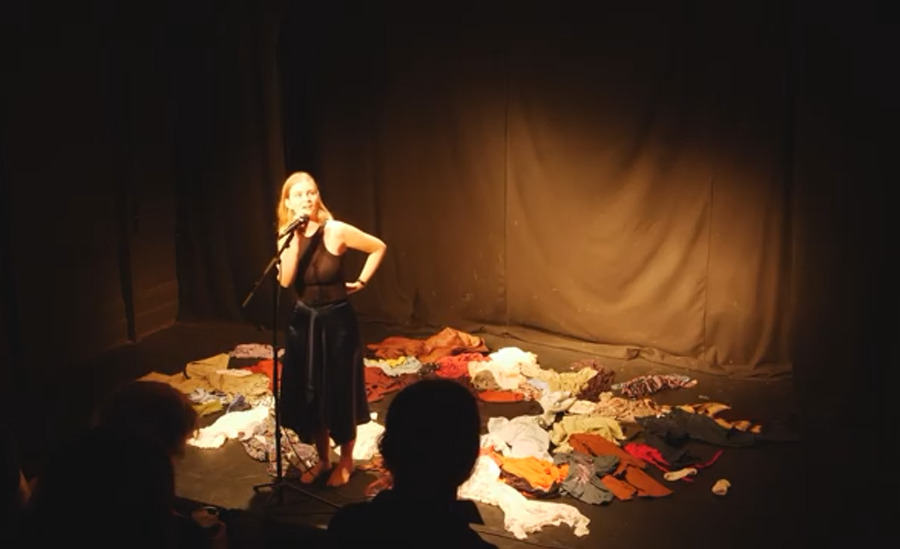
While de Putter makes an eloquent case for the stories of women over millennia that have been marginalised and/or silenced, the metaphor could also be said to be applicable to the disenfranchised the world over. The repeated point made that women don’t trust their own voices because they have been gaslit and silenced for so long, can be said for many demographics today. In that respect, the message within Echoes is truly universal and for all time.
© Michael Davis 2026
Echoes ran at the Etcetera Theatre, London on 25th to 28th August as part of the Camden Fringe Festival.


“This is a story of a woman. Of women.” — the lines you quote alone tell me Echoes knows exactly what it’s doing with its Greek material. What struck me in your review is the point that the Greeks, hardly a gynocentric culture, still left observations about men and women that became the archetypal templates for psychology and beyond. Framing stories of women from “times supposedly different from ours” through that lens feels like a smart way to make ancient myth feel immediate at the Etcetera Theatre. Reviews like this make me want to catch the production just to hear how those competing versions of each myth play out onstage. Thanks for the thoughtful write-up.
LikeLike
Thank you for your kind words. Prior to its run at the Etcetera Theatre, Echoes was performed earlier in the year at another venue. This being the case, it’s possible that de Putter may perform the show again in the near future and you can watch it then. Anyway, have a good weekend. MD
LikeLike