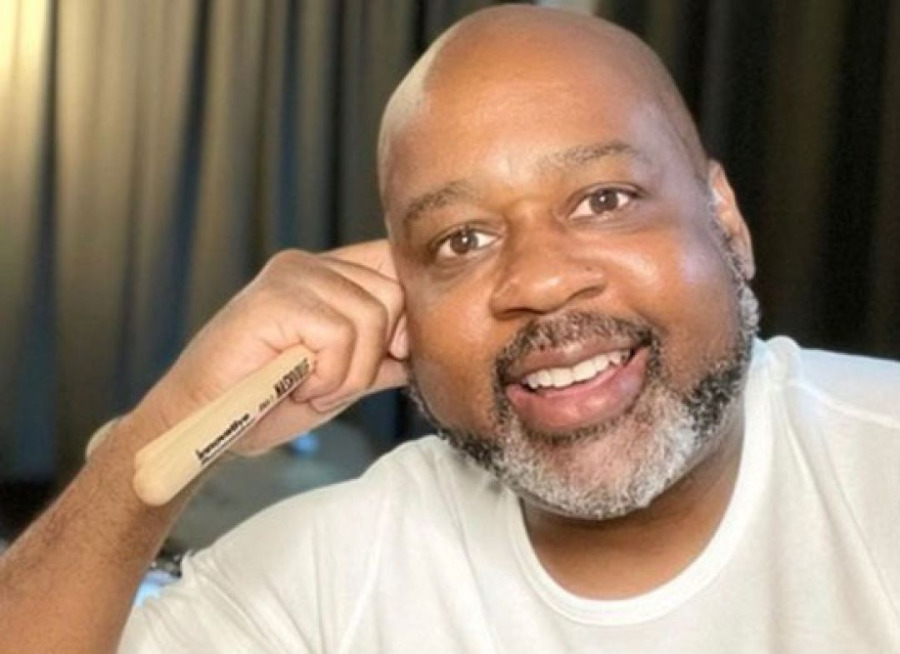
Working regularly on Broadway shows would for many people be seen as reaching a peak in one’s theatrical career. Clayton Craddock – a drummer who not only has 26 years of experience playing in professional musical theatre, but also has his own podcast (Broadway Drumming 101), teaches drumming classes, become an author, and has ‘been there, done that, bought the t-shirt’. His book – Broadway Bound and Beyond A Musician’s Guide to Building a Theater Career – explains EVERYTHING you could possibly want to know about the logistics of working as a drummer in top-tier theatre. Having said that, after reading a few chapters (which are all short), the reader realises that many of the ‘life lessons’ that Craddock teaches are applicable to not only musicians or non-actors who work in theatre, but for anyone who has to progress through different strata in their chosen career.
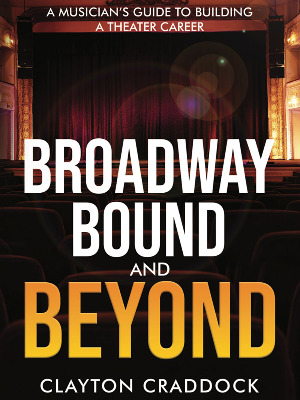 One of things that Craddock speaks about early on is “make it plain”. It is certainly the ethos of the book, as Craddock explains clearly the different ‘balls’ that musical professionals have to juggle – including networking (especially in the early part of one’s career), playing and developing an immersive knowledge of (and love!) of every sort of music, plus the ‘mundane’ tasks of getting enough sleep, eating well and staying healthy.
Much like the documentaries you see of potential boxers undergoing training, the book obliquely highlights the mindset of the individual is paramount and that the likelihood of success can be predicted to a large degree early on by the ‘right’ attitude of the individual.
However skilled one is, that is only the foundation for a potential life as a drummer or musical performer. Sensitivity to music as a tool for the ‘storytelling’ is key. For many shows, what’s required isn’t flashiness or one-tone intensity, but adherence to rhythm, the click rate (which we’ll talk about later) and a deft touch for when more nuanced playing is required. Punctuality can also not be overstated. If as a musician you’re not early, you’re late. No arriving just before a performance is due to take place. And while one’s musicianship is a cornerstone skill, the ability to ‘hang’, and be a positive, calming dependable presence in ‘the pit’ where you’ll spend hours on end is a ‘quality’ that cannot be taught.

Continuing on the theme of adjacent-skills that drummers/musicians need, Craddock stresses the importance of keeping on top of one’s finances, especially in regard to saving money for retirement, for when shows’ runs finish early or any other events that interrupt long-term stability. As well as being a musician, Craddock has also for periods of time worked in financial services, so he knows full well the duality of professional theatre – its creative wellspring is, for better or for worse, entwined with the economics of staging such an enterprise.
With this in mind and the lack of sentimentality or personal bias for closing poorly performing shows, the onus is on performers to treat themselves like a business and make sure they are recompensed for all their hard work (something that New York’s Local 802 union helps with, through securing negotiated contracts, setting minimum wages, overtime rules and rehearsal pay).
While I’ve been writing about the Arts for more than a decade, it’s fair to say that I’ve not written as much on musical theatre – especially from an in-depth perspective. Be that as it may, I found the insights and advice the book provides fascinating and very pragmatic.
Not only are there supplemental equipment references such as the AirTurn TAP pedal (which allows pages to turn hands-free), the book goes into some detail regarding the click track (played through headphones of the drummer to keep timing consistent across in live shows and he in turn becomes the ‘metronome’ for the other musicians), what ‘subbing’ entails (substituting for a musician in a show at short notice), plus what is expected in a ‘29-hour reading’ versus a full-on workshop.
One part of the book that really resonated with me, was once you’ve reached a certain level of busyness and success, is knowing when to ‘take your foot off the pedal’ and only work when all the benefits of a job greatly outweigh any ‘cons’ or difficulties. It’s something I’ve had to do in recent years – dialling back on reviewing commitments to deal with ‘real life’, and only reviewing things that ‘ignite my fire’. In some ways as a seasoned musician/performer, it’s a reversal of the beginning of the career when you’re most likely to say “yes” to everything. But at the end of the day, relationships, family and commitments exist outside of theatre, and you don’t want to let that side of things suffer because you are perennially busy.
The genesis of this book began during the years of COVID and many people who worked in theatres underwent an existential crisis. If you don’t perform, if no one sees or hear you, do you ‘exist’? Craddock’s book shows that with the right perspective, everyone can still benefit from your years of experience, albeit in a different format. One only has to be open to think ‘outside the box’…
© Michael Davis 2026

Broadway Bound and Beyond: A Musician’s Guide to Building a Theater Career by Clayton Craddock is available to buy from Cincopated Publishing on Amazon: $9.99 Kindle, $29.99/£27.99 hardback, $23.99/£17.79 paperback.
https://broadwayboundbook.com / https://www.instagram.com/claytoncraddock/ https://www.tiktok.com/@theclaytoncraddock/

