Stagehand. Actor. Lyricist. Looking at the experiences of Eden Phillips, he could be said to be the ‘Forest Gump’ of the theatrical world – a tangential observer to the ‘Great and the Good’ in British theatre. As a living encyclopedia of the West End and beyond, Phillips has seen all facets of the business and is uniquely qualified to talk about what it’s like to work backstage, to ‘tread the boards’, as well as collaborating on songs for potential shows.
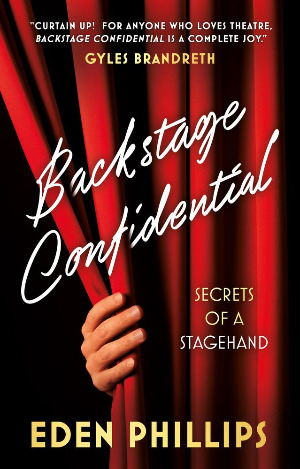 Backstage Confidential is Phillips’ own account of his remarkable life, told in a matter-of-fact manner – he’s so chilled in fact that the moments of levity sneak up at you! One used to hear about there being an abundance of jobs in the 1960s and that it was easy to ‘walk into’ new jobs at a moment’s notice. Certainly, by Phillips’ account, it was how he got his first big break.
Through talent and a love of all things theatrical, Phillips worked his way up as a stagehand to head flyman (senior technician responsible for operating and managing the counterweight fly system, moving scenery, lights, and curtains safely above the stage). Like the other stagehands he worked with, Phillips spent time many an hour during the quiet periods of the performances in the local pubs (making me nostalgic for when I worked in the same area!) – and able to time to the minute when they had to return to the theatre! Anyone who has spent a significant amount of time in the West End will recognise the pubs and theatres referenced. The watercolour illustrations that accompany each chapter also convey the essence of the venues mentioned.
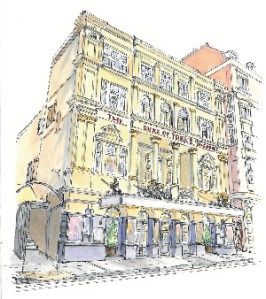
But while Phillips won the respect of his stagehand peers, it’s very apparent that what set him apart was his curiosity and love of every aspect of ‘the craft’… One of his favourite pastimes was catching the second half of shows (for free) and discreetly watching the performances from the Upper Circle or Gallery of theatres. There’s something to be said for working in close proximity to- and having the cream of- British theatre on your doorstep.
As you’d expect, there are anecdotes aplenty regarding the theatrical royalty Phillips met and encountered in the 1960s and ’70s, including Noel Coward, Peter O’Toole, Jean Simmons, Tim Rice, plus many more. Nowadays, it’s not uncommon for actors to have ‘real’/conventional jobs to supplement the periods when there isn’t much around in the way of work. What I didn’t know prior to reading Phillips’ book, is that some actors back in the day also moonlighted as stagehands – one of whom was Jon Finch, who would later star in Roman Polanski’s Macbeth and Alfred Hitchcock’s Frenzy. But I digress. Having Harold Pinter personally instructing you on he what he wants stage doors to close during the performances must count as one of the most unique and unusual memories one can have – and that the fact Phillips was singled out as ‘stage liaison’ to the director gives you some indication of Phillips’ personal qualities. Speaking of which, Henrik’s Ibsen’s Peer Gynt is one of those plays that’s rarely performed live, as it is an endurance test on many levels. But Phillips has the distinction of having worked one such production – with Tom Courtenay no less.
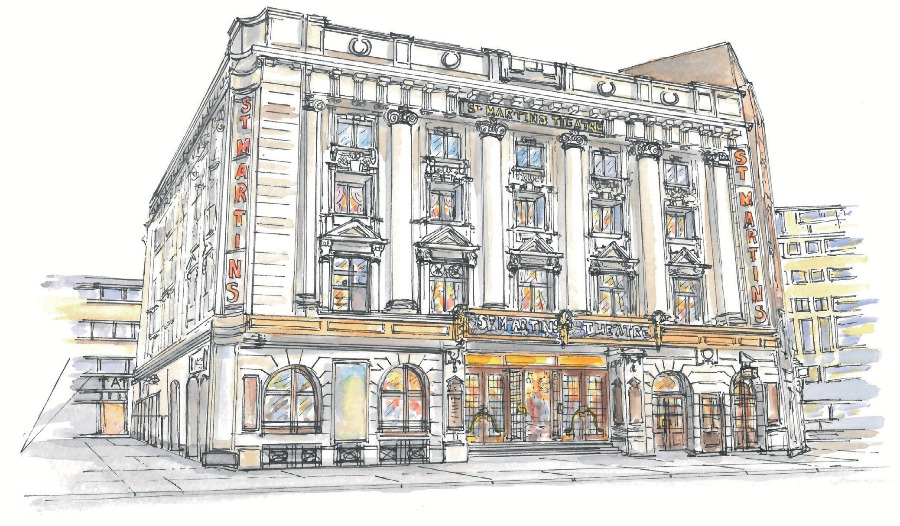
One thing I’ve neglected to mention is how the chapters are arranged. Rather than setting everything out chronologically, each chapter (at least initially) focuses on plays and experiences associated with different theatres – usually within the West End/London. While this logic may sound counterintuitive, in a roundabout way it makes sense. Kind of like the protagonist in Audrey Niffenegger’s The Time Traveler’s Wife, who is routinely pulled through time to people/places of emotional significance.
Anyway, as we read about Phillips’ experiences outside London, we also see him taking his interest in theatre further – studying drama in Manchester for three years, and then making the transition to television and the stage as an actor. I confess to not recalling Phillips in anything before I read his book, but knowing that he appeared in TV programmes such as Dad’s Army and Doctor Who, it’s ‘nothing to sneeze at’, and like his behind the scenes work in theatre – whether it’s recognised or not – his contribution will always be a part of greatness.
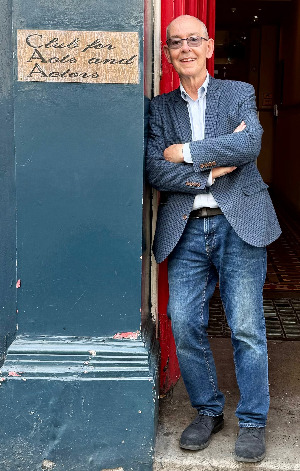
Without giving too much away, the opportunities that open up with being on stage and television lead to Phillips’ publishing venture celebrating musical theatre – at a time when such periodicals didn’t exist (or the internet/websites for that matter). Phillips’ publishing venture had the virtue of not been tried before, but for any pioneer there are always hiccups along the way. But topping this achievement are the opportunities that allowed Phillips to collaborate with seasoned musical veterans for potential shows. You have to read the book to see what became of them, but to the use the prizefighter analogy, Phillips had ‘his shot’ at several lifelong ambitions (while the average person would be lucky to achieve only one).
In any case, it goes without saying that Phillips has a led an immeasurably rich life, observing the golden age of British theatre firsthand and had the opportunities to be creative in so many ways. We should all be so lucky.
© Michael Davis 2026

Backstage Confidential: Secrets of a Stagehand is available to buy from The Book Guild from 28th May.
https://bookguild.co.uk/bookshop/autobiography/backstage-confidential

