Plays revolving around moral conundrums and interpersonal relationships make for compelling narratives, often leaving the audience ‘flipping’ back and forth regards the issue in question. With this in mind, last year, a new writing showcase was performed by the Happy Cannibals theatre company. Its goal: to examine how the modern world shapes our relationships and the ethical dilemmas that arise. In terms of tone and subject matter, each of the three short plays are distinct from each other, though all raise pertinent questions within the minefield of assumptions.
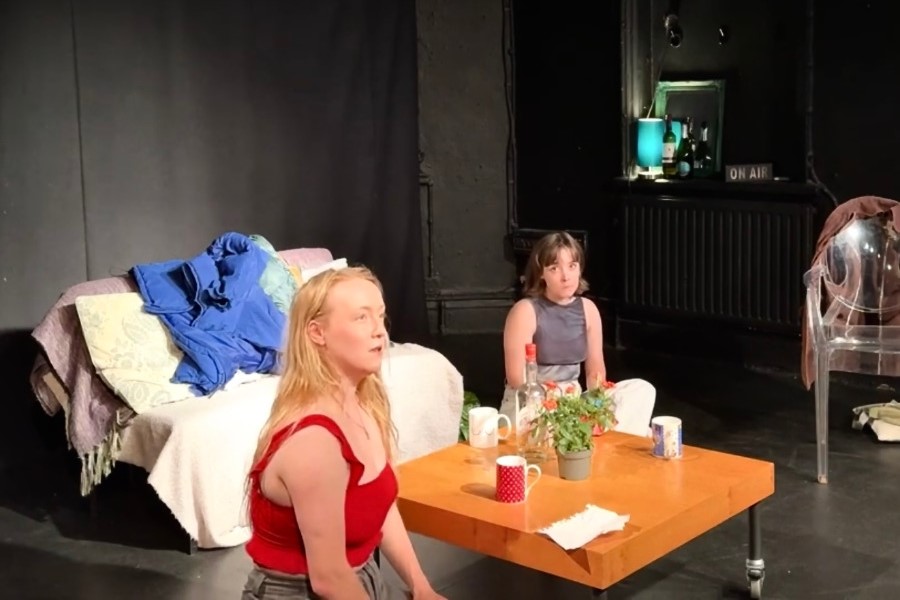
The first play (UnSure) by Rachel Kitts is a multilayered, serious look at the aftermath of a threesome. Sarah McCurrach plays Brooke the girlfriend (or rather former girlfriend) of Max – an improv comedian, while Grace (Rachel Kitts) is a mutual friend brought in to ‘spice things up’. Meeting up again two weeks later at another social engagement, Grace is once again feeling the worst for wear for drink. But following a number of revelations from Brooke, Grace soon sobers up and is petrified at the implications of what’s been divulged – shaking not only her trust in Brooke, but her assessment of her own sexuality.
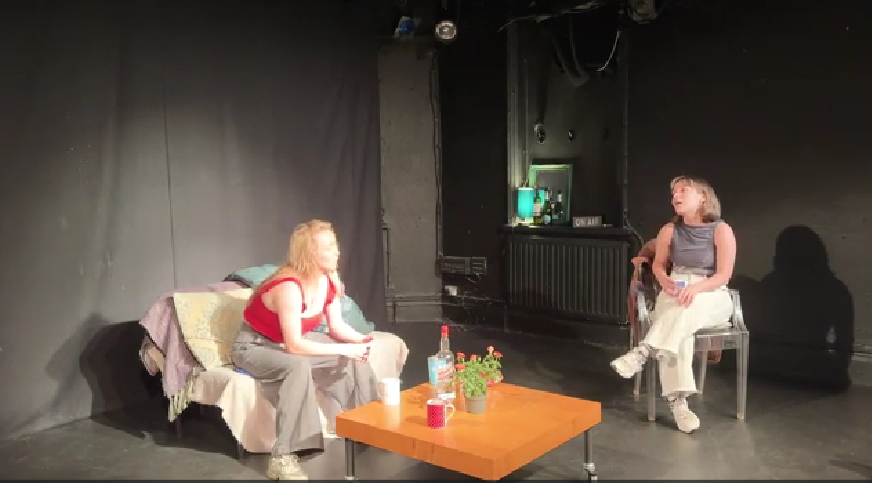
Within the heteronormative arena, consent is all-important in gauging whether any sexual activity has transgressed or not. But within the play, the dynamic of the threesome bears closer scrutiny. Brooke’s sobriety during the ‘drunken’ threesome sets alarm bells ringing for Grace, as it suggests premeditation. More alarming for Grace is the assertion that she has slept with Brooke – and only Brooke – in the past, but doesn’t remember the occasion at all. McCurrach ably conveys Brooke’s frustration at Grace’s response and angrily refutes the possibility that she’s a ‘predator’, refusing to believe that Grace is straight at all. (Of course, Brooke’s assertion precludes the possibility of people being bisexual at all and is not challenged by anyone, but this isn’t addressed in the play.)
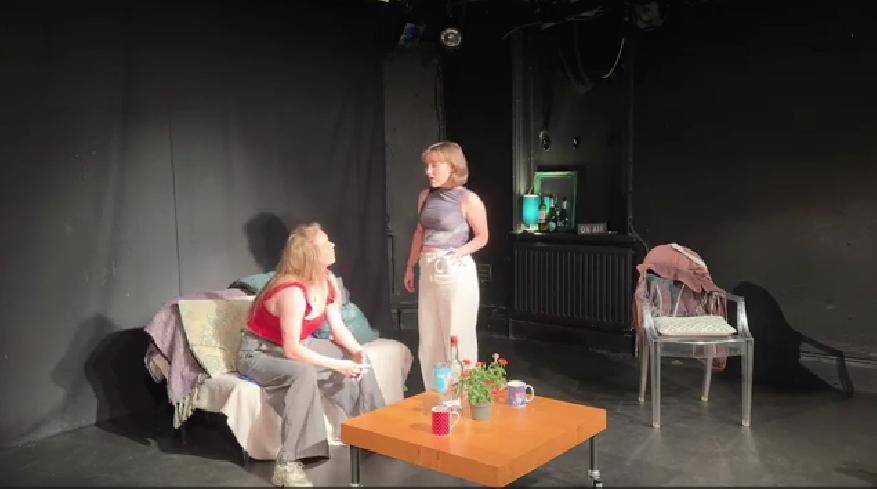
By her own admission, Brooke’s epiphany that she is 100% gay only took place a couple of weeks ago, while Grace still thinks of herself as straight, but enjoys sexual pleasure from different sources, without putting a label on what gives her pleasure. Of course, there is also the possibility that Grace is definitely attracted to women (at least some of the time) and she’s suppressing this facet of herself, using alcohol as a means to a) blot out memories and b) a ‘get out of jail card’ for any sexual activity while ‘under the influence’. But ‘the facts’ don’t explain Grace’s solo ‘one-night stand’ with Max after the threesome, which does suggest the situation is more complex than even Brooke realises… Kitts convincingly conveys Grace’s bewilderment at what’s been disclosed, and possible resentment that she has been (and still is) being ‘coerced’.
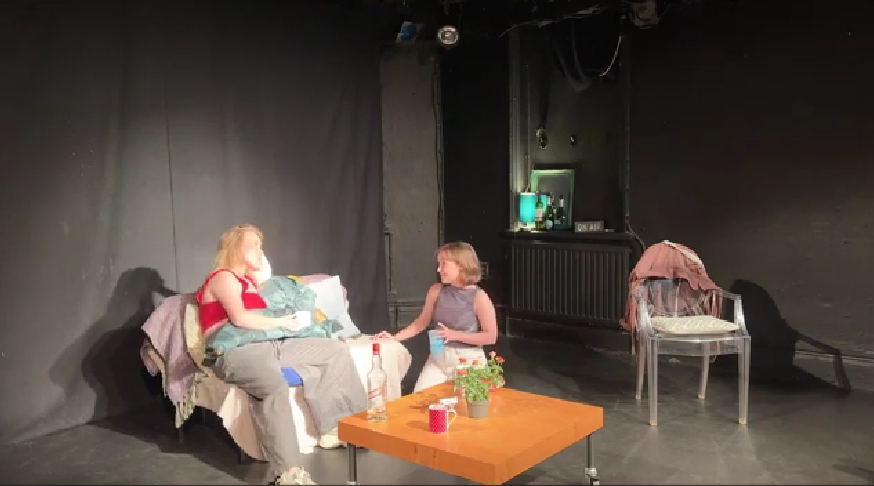
UnSure asks many questions regarding open relationships and preferences, and it could be argued that the conclusions the audience comes up with are tempered by their own experiences that they bring to the show. Within its compact timeframe, UnSure also highlights the problematic nature of memory and feelings to determine ‘facts’ and empirical ‘truth’. Certainly, the premise of UnSure lends itself to being developed into a full-length play and will in the future be adapted into a film, titled Lemons.
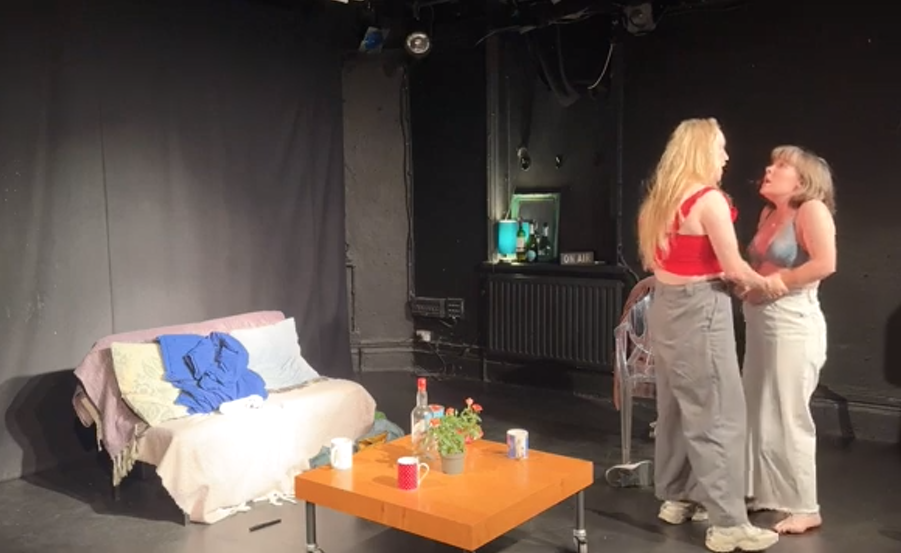
Arguably the most universally relatable play of the evening, UnAvailable by Jessica Murdoch examines the double-edged nature of smartphones, and just like social media, they contribute obliquely to the erosion of mental health. Similar to UnSend, Jeri (Jessica Murdoch) wakes up ‘unwell’, but has to clean up promptly, before her boyfriend Pete (Jonathan Aarons) and their friend Sam (Benedict Clarke) enters the room.
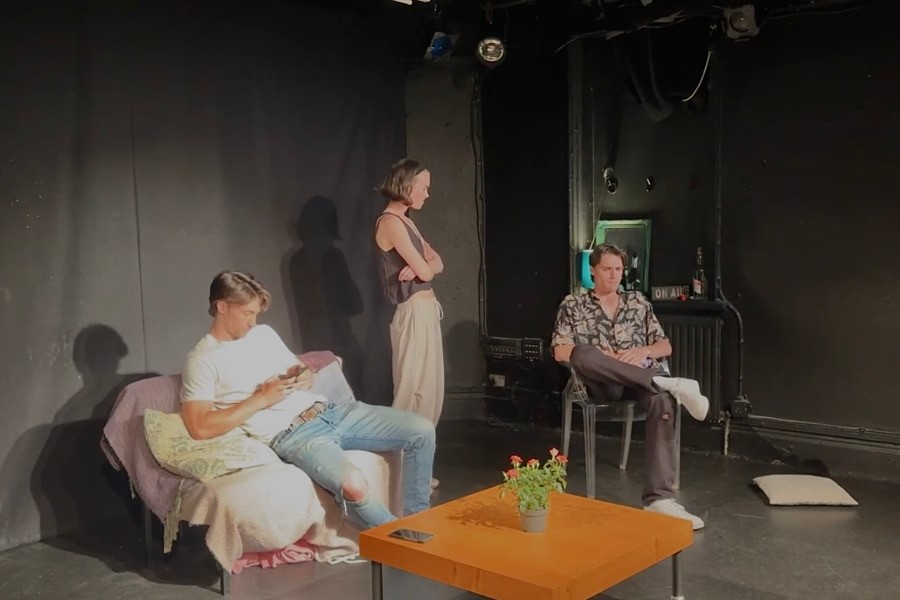
What becomes immediately apparent is Sam’s (and by inference, also us) first priority is to find the Wi-Fi and then proceeds to not listen to Jeri properly when she tries to hold a conversation with him. But if Jeri appears ‘fragile’ at the beginning of the play, we’re soon privy to what she’s been going through the past few months at work and its toll on her mental health.
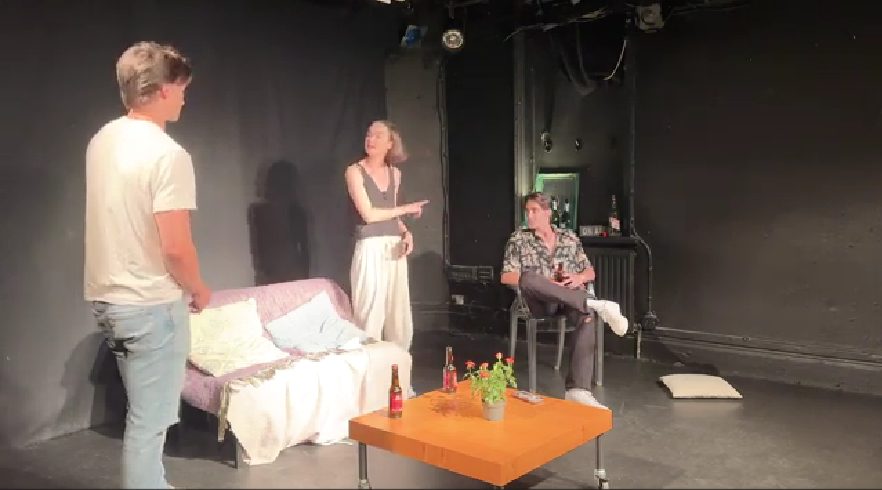 At this juncture, it should be pointed out that tonally, there is a smattering of humour present, especially from Clarke, but like a food that has ‘turned’ leaving a bitter aftertaste, beneath the play’s ‘sweet exterior’ lies uncomfortable truths that are hard to swallow, to accept head on… On the one hand (to quote King Lear) Jeri is “more sinned against than sinning”, with Pete (who like most people checks his phone all the time) who doesn’t reply to Jeri’s unequivocally fraught ‘cry for help’ via text and chooses to instead spend time with Sam.
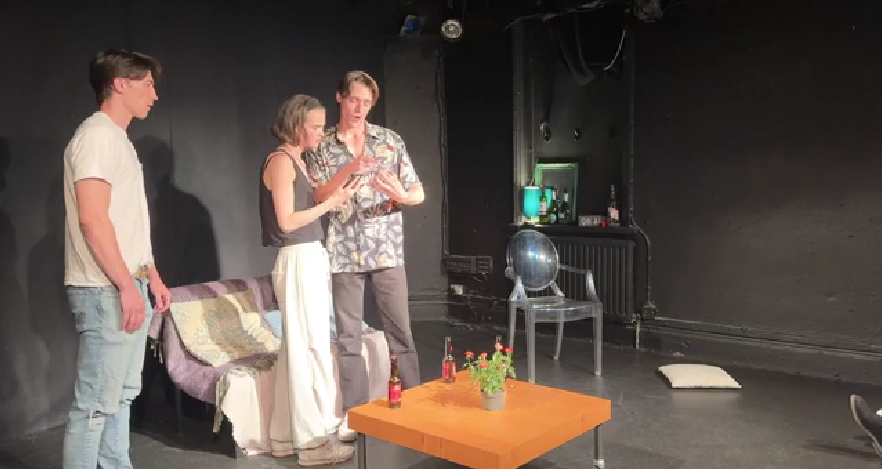
Conversely, the play shows how by its solipsistic nature, Jeri’s eroded mental health has made her forget about friends’ birthdays/social events and for people like Pete who don’t have the stamina to support others’ mental health week in week out, they find they’re ill-equipped to offer solace or practical help for loved ones with long-term depression.
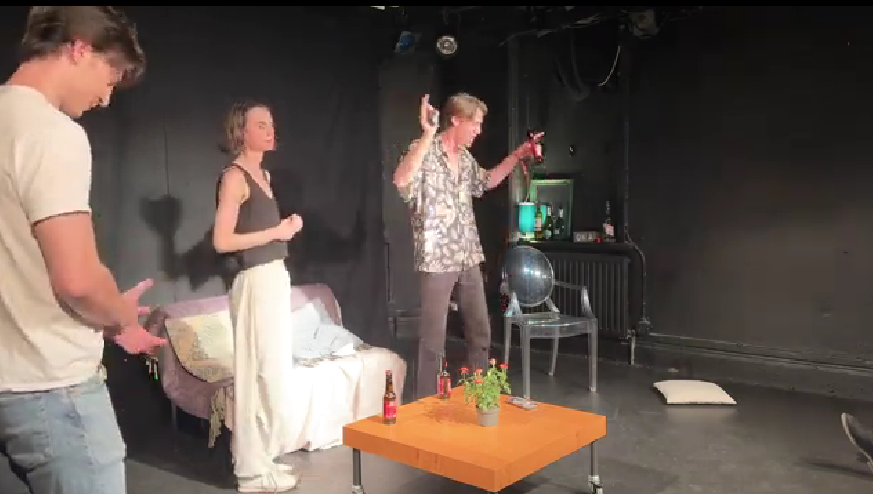
UnAvailable is to be commended for deftly broaching the paradoxical results when wanting to connect and technology’s unintended ability to thwart communication.
Closing the evening is Maya Yousif’s UnGodly – a satirical take on accountability and self-deception when it comes to figures in the public eye, who are meant to possess some sort of moral compass. Joe Tyler Todd plays the vicar of Horsham, who during a village fête arrives drunk and crashes into a cake. Unfortunately for him, this incident is filmed and he becomes a TikTok sensation.
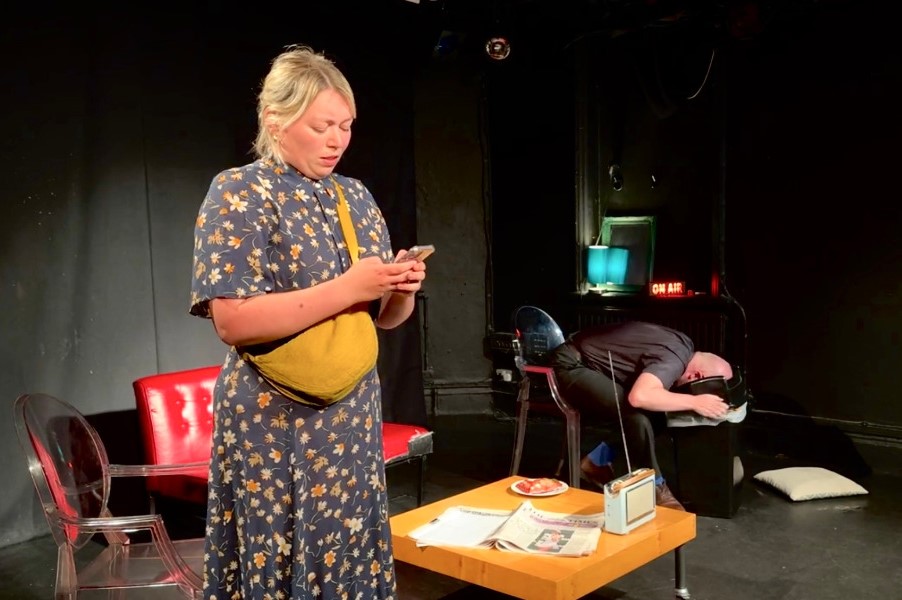
Ella Blackburn plays his beleaguered publicist, who has her ‘work cut out’ for her, while Sarah McCurrach is the producer of a radio station in West Sussex, who has invited the vicar to tell ‘his side of the story’. In many ways, Todd’s character reminded me of some of the more subtler, humorous performances of Ade Edmondson, and the vicar’s sheepish mantra of “I was spiked” has everyone in stitches every time. In many respects, the tone and themes of the play are like The Thick of It, with the childlike public figure needing protection against his own proclivities.
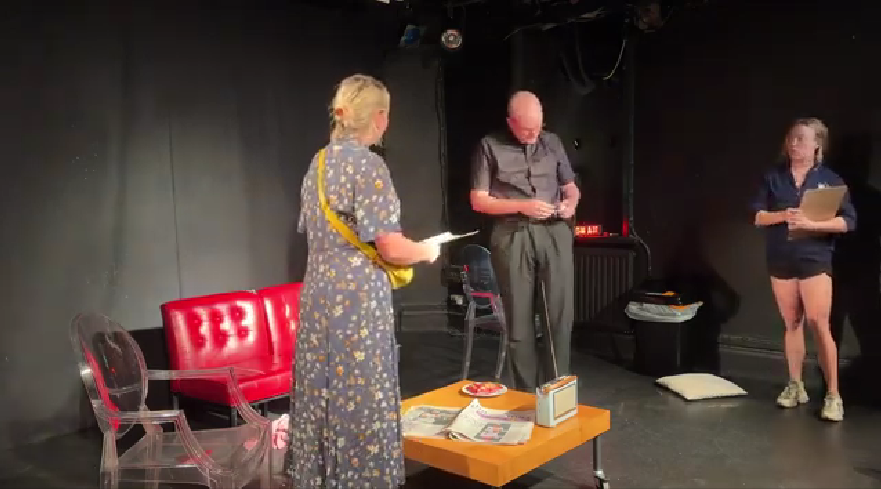 Running tandom to this plot is the publicist’s own personal nightmare, as her school-age daughter, Lucy, has been caught using the family credit card to pay to view an OnlyFans account. By the publicist’s own admission, Lucy’s ‘only crime’ was to be caught, but her comment is rather telling about her values and there is a dissonance between her daughter’s ‘innocence’ and what she really thinks of the vicar’s ‘food poisoning’ or ‘being spiked’ alibis. At the same time, the publicist treats the vicar like a child who can’t be trusted to behave himself, which while funny in itself, only goes to show the inconsistency of her actions.
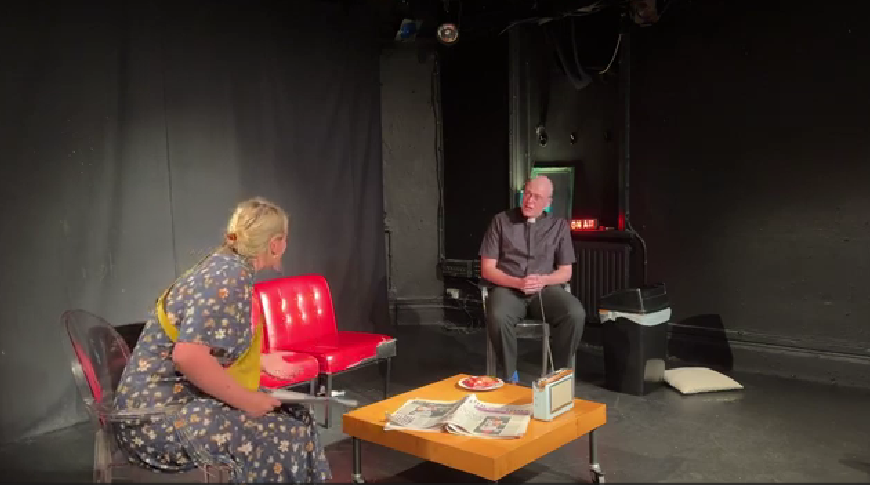
Although exhibiting different levels of ‘energy’ (reflecting their respective states of panic!), both Blackburn and Todd’s performance complement each other, as the ‘serious’ message of the play is tempered by their dry humour.
© Michael Davis 2025

Mewling and Puking: A New Writing Showcase was performed at the Hen & Chickens Theatre on 26th to 28th August 2024. This review is based on an online broadcast recording of the show.

