Last week a former British footballer, Stan Collymore, replied to various comments questioning his ‘qualifications’ (or supposedly ‘lack of’) to speak about responding to racism. During his professional career between 1990 and 2001, her recalled how he was called the n-word by opposition fans in 20+ games and on social media, suffered similar vitriol before demanding the powers-that-be clamp down on this behaviour. 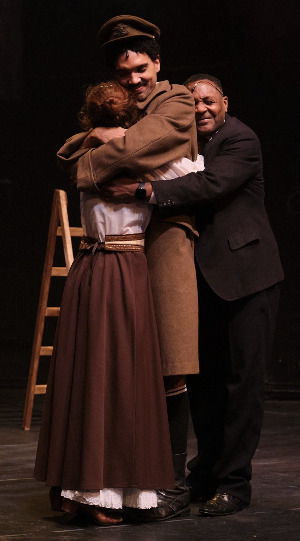 If such treatment is commonplace in Britain during its so-called ‘more enlightened’ times, how would someone of a similar background fare in the early 20th century? Our Little Hour is a musical that examines the life of Walter Tull, who in the early 20th century, became the first ‘person of colour’ to not only play professional football in the United Kingdom, but also be recommended for the Military Cross during the First World War. And just like Collymore, Tull’s father was from Barbados who went on to marry a white English woman. In today’s parlance, both men would be described as ‘mixed race/heritage’, but like Emily Brontë’s Heathcliff in her book Wuthering Heights, anyone not of 100% European descent was deemed by society ‘black’, ‘the other’, and worthy of suspicion…
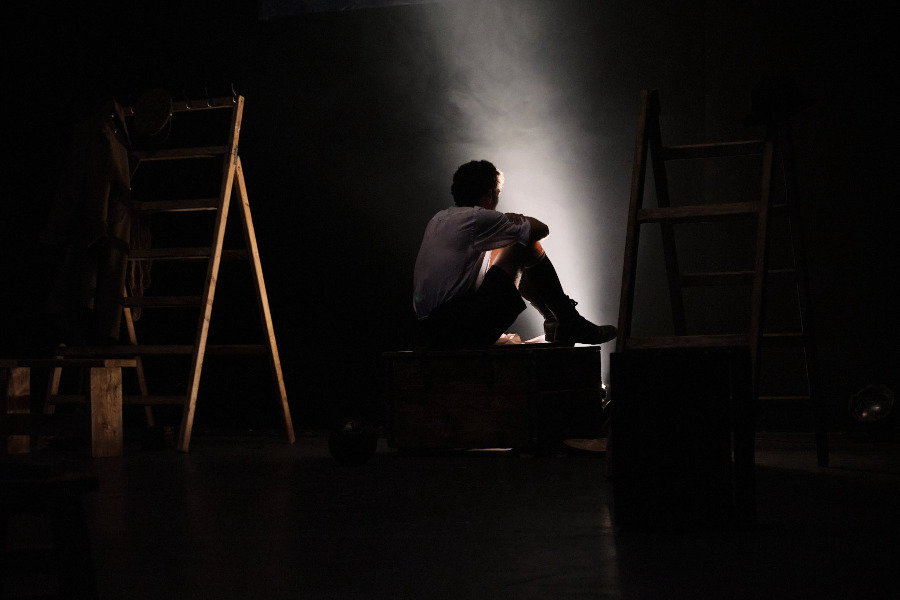
Directed by Amanda Horlock, and with book and lyrics by Dougie Blaxland and an original score by Chris Anthony, Our Little Hour features Leon Newman as Walter Tull, Geebs Marie Williams as his mother – Alice Tull, and Neil Reidman as his father – Daniel Tull. All the other characters that appear in the show are played by the trio.
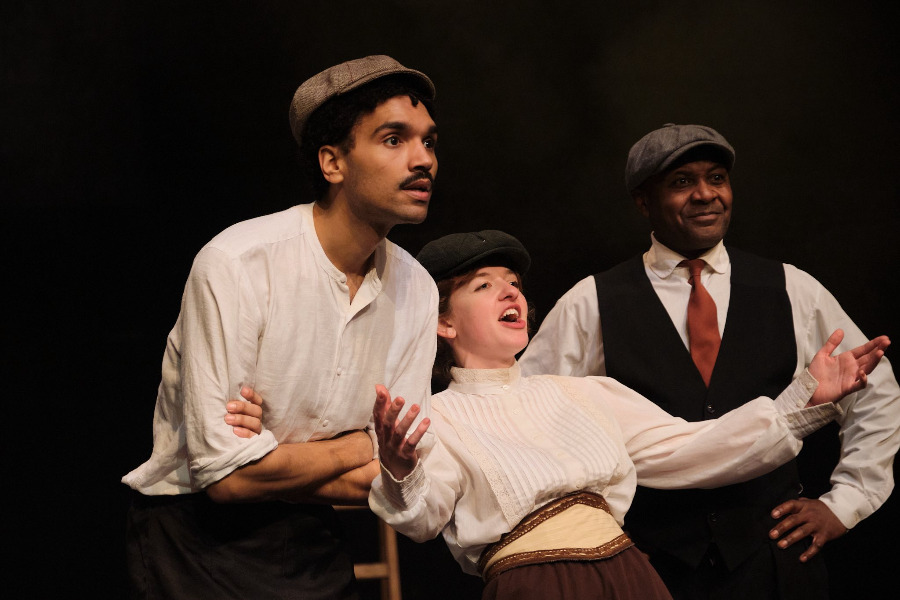
Framing the show are visitors to a war memorial who find Tull’s name there, but nothing else of his many achievements. But how did it come to this? The first half of the show traces Tull from his childhood in Folkstone to early adolescence in London. While we sense that within the confines of their home that the Tulls are happy, they are only too aware of the animosity they receive from some neighbours and people who don’t know them. Tull’s inherited his passion for playing football from his father, which he plays with his older brother Edward. But alas, just like many who lived in Victorian and Edwardian Britain, Tull was made an orphan when his parents died at a relatively young age and sent to live in a Methodist orphanage in east London.
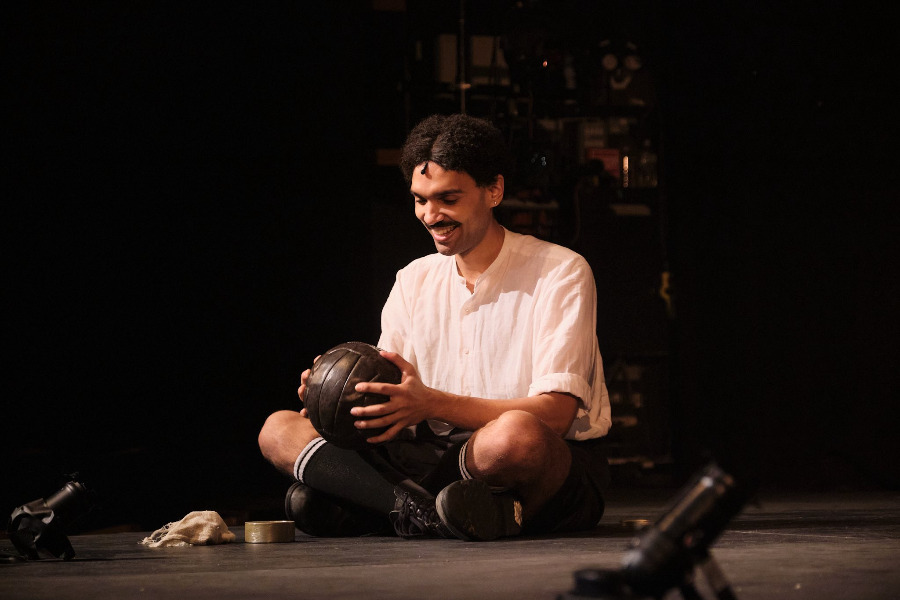
The Dickensian-level of adversity that Tull suffered in his early life could have been the end of his aspirations, but the second half of the show begins initially on a more upbeat note, as Tull’s passion for football takes him from the local ‘amateur’ teams to Division One (the name for what top flight professional teams played in, in England before 1992). But even with achieving his dream, Tull finds that sometimes even the management of his own team blame him for the racist abuse he directly receives from opposition fans, instead of taking issue with the oppositions fans themselves…
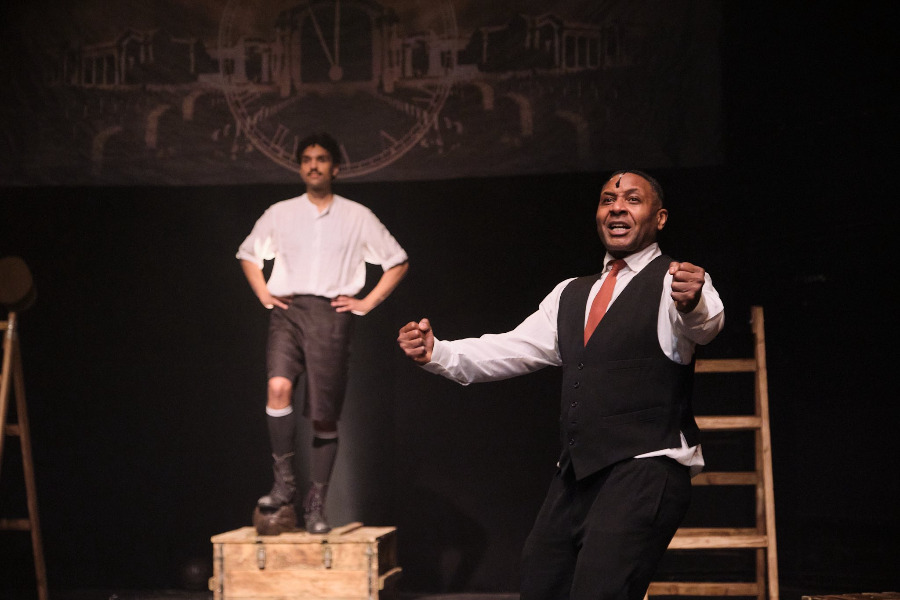
Moving out of London to join a team that valued him could have been the icing on the cake for Tull, but the outbreak of the First World War put the kibosh on long-term happiness, as he feels compelled to enlist in military service and “not be left behind”…
The choice to portray Tull’s life as a musical is an unusual one, but in the case of this show, it works organically. I’m not someone who likes all musicals, but in the case of Our Little Hour, I was impressed by how the songs served the storytelling and not felt incongruous. Blaxland’s lyrics are poignant and the songs’ melodies are enjoyable to listen to, without being ‘overproduced’.
Our Little Hour could have, of course, have had a much bigger cast filling all the roles. But as a nationally touring show with overheads to cover, the cast perform admirably with clarity in who they are playing and pathos in their deliverance.
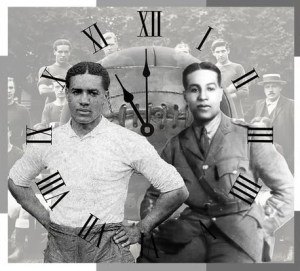
While a statue to Tull exists in Northampton, honouring his service to the local football team there and his heroism during the First World War, efforts for his recognition elsewhere have been stifled. It’s no secret that when Tull’s commanding officer put Tull’s name forward for the Military Cross, his recommendation was ‘shot down’ by the Ministry of Defence, as the by-laws at the time stated only men of European descent could be made fully fledged officers and awarded medals that reflected that status. Even though the legal impediment to retroactively awarding military medals has since been rescinded, ‘officially’ the Ministry of Defence still hasn’t awarded Tull his Military Cross because records prior to 1940 were ‘lost in a fire’… My “two cents’ worth” is that the Honours system in the UK is absurd, reserved for people who’ve reach a certain level of fame (with a token amount of ‘charity’ work) and not the content of their character. While I hope that Tull will eventually receive the accolades and worldwide recognition that he richly deserves, at present he is one of the multitude since time immemorial who have put up with so much in their daily lives, but haven’t and don’t expect a reward in return…
© Michael Davis 2026

Our Little Hour ran at the Midlands Arts Centre on 27th and 28th February. It continues its UK tour at the following venues:
Weds 4th March
Alnwick Playhouse
https://alnwickplayhouse.co.uk/event/our-little-hour/
Thurs 5th to Sat 7th March
Alphabetti Theatre, Newcastle
https://www.alphabettitheatre.co.uk/ourlittlehour
Tues 10th March
The Redgrave Theatre, Bristol
https://redgravetheatre.com/
Weds 11th March
The Lighthouse Theatre, Poole
https://www.lighthousepoole.co.uk/event/our-little-hour/
Thurs 12th March
Dorchester Arts
https://www.dorchesterarts.org.uk/whats-on/
Fri 13th and Sat 14th March
Yvonne Arnaud Theatre, Guildford
https://www.yvonne-arnaud.co.uk/
Tues 17th and Weds 18th March
Beam Theatre, Hertford
https://beamhertford.co.uk/
Fri 20th and Sat 21st March
The Courtyard Theatre, Leeds
https://www.leedsplayhouse.org.uk/
 Breaking The Fourth Wall