Judith Kerr, Philippa Pearce and Kathleen Hale were British authors who all wrote classic children’s book in the 20th century. In the case of Pearce and Kerr, their respective books Tom’s Midnight Garden (1958) and The Tiger Who Came To Tea (1968) were published within 10 years of each other. Hale, however, had 19 books published (related to the character Orlando the cat), from 1938 to 1972.

Linking all three authors is David Wood, the UK’s most experienced practitioner of adapting children’s books to the stage and often described as ‘the national children’s dramatist’. Entrusted to bring the aforementioned books to life on the stage and television, Wood corresponded with these women over many years – gleaning not only their opinions on the ‘translation’ of books to live action (or animation), but also organically building trust and lifelong friendships.
Assiduous by nature, Wood kept all his correspondence in the attempted adaptations of books to the stage/other media and in Tiger, Tom & Tinkle, the collated correspondence is an eye-opening insight into the potential problems and solutions of staging a children’s book.
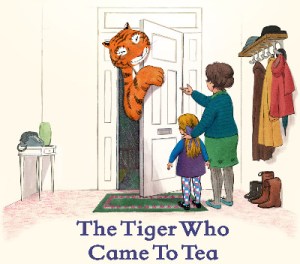 It’s acutely apparent that Wood takes this ‘responsibility’ extremely seriously – not only to faithfully adapt the author’s work (in spirit at least), but also to make the performances as magical as possible for the young audience. Wood never loses sight of the fact that in plays such as The Tiger Who Came To Tea (which is aimed at children 3+ upwards) that this is in all likelihood the children’s first experience of live performance – a ‘make or break’ experience that will kindle or quell a love of theatre.
The Tiger Who Came To Tea is a short book, so making an hour-long show based on it requires some thinking ‘outside the box’. But how much could be added to Tiger, while a) still being true to the book and b) the author (in this case Kerr) still be happy with it?
The ‘reverse engineering’ of the events in Tiger by Wood’s train of thought is fascinating to read and we see time and time again how Wood wears ‘different hats’ during his creative journey, ever-mindful of the needs of pre-school children and what the positive things they respond to. With this in mind, the introduction by Wood of miming, repetition of words and simple songs that children can quickly learn makes perfect sense.
One astute observation made in the book is that often authors of children’s books often exclude adults in the stories, which is why Kerr in contrast includes the parents in her stories, emphasising the importance (in her own words) of the family unit. The presence of parents and adults are even more apparent in Wood’s adaptation, as once-familiar figures such as a milkman, plus a postman make an appearance, increasing the tension prior to when the tiger appears.
For those wondering, Kerr’s own childhood background is alluded to in the book as an émigré from Germany in the 1930s, as is her marriage to screenwriter Nigel Kneale. But while these details add ‘colour’ to the proceedings, they don’t impact on Wood’s or Kerr’s ‘interpretation’ of Tiger – a simple tale that children can whole-heartedly embrace.
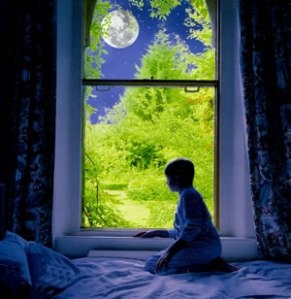 While Tom’s Midnight Garden is classed as a ‘children’s book’, its entrenched themes regarding memory, isolation and childhood versus adulthood naturally requiring an astute, nuanced mindset. If Kerr’s initial questions for ‘her’ play were straightforward and confined to the early stages of development, we see from the correspondence that Wood had a much more challenging time with Tom’s Midnight Garden. On the one hand, Pearce’s fastidiousness is understandable, as both the movie and TV adaptations to date had concentrated on the ‘broad strokes’ and arguably not picked up on the most important aspects of the tale. But while there is some merit in the philosophy ‘the devil is in the details’, looking exclusively at the book’s minutiae to the Nth degree is one way of losing sight of the bigger picture and what makes the original tale ‘magical’ in the first place. As someone in publishing who has had to deal with authors who are worried about ‘changes’ to their work, I completely sympathise with Wood during this period. In such circumstances, tact, diplomacy and occasionally firmness is required. As long as authors’ input are sought, are kept fully-informed of potential changes with rational arguments for ‘tweaks’, and they feel like they have a measure of control, authors are usually happy in the end.
It certainly helped that Tony Graham, the Artistic Director of London’s Unicorn’s theatre who was collaborating with Wood on staging the show, understood what was needed in practical terms to stage the show and backed up all of Wood’s suggestions for what was included (or omitted) in the script.
In any case, Wood et al must have done something right, because the show went on to win two awards – not only for the London production, but a separate one in Manchester. One chronological detail that isn’t important in its own right, but is of interest, is when the shows were performed. The show’s appearance in New York coincided shortly after the events of 9/11. Aside from the show’s positive qualities, perhaps its bittersweet correlation with T. S. Eliot’s Four Quartets struck a chord:
Time present and time past
Are both perhaps present in time future,
And time future contained in time past.
But I digress. The ‘request’ by Pearce to ‘land’ the show with the UK’s National Theatre, when Graham at the Unicorn Theatre had already expressed support for the development and performance of the show, could have put a halt to the proceedings. In the ‘real world’, the ‘biggest name’ isn’t necessarily going to make your ‘dream project’ a priority. Wood’s diplomacy on this issue is commendable and goes to show that when working on projects such as this, it is the ‘soft skills’ – empathy, interpersonal communication, adaptability, emotional intelligence – that have stood him in good stead over the years.
But ‘managing the expectations’ of authors who have no idea how theatre and television producers greenlight projects has its stressful aspects, and this is even more apparent when working on trying to facilitate progress on Hale’s Orlando animation project. Given a mandate by Hale to facilitate the production of a show with an animated studio she was impressed with, Wood had his work cut out trying to arrange this enterprise.
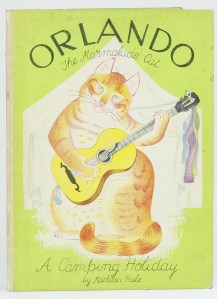 Reading about Hale’s desire to develop the Orlando books for animation, brought to mind the golden age of children’s books adaptations – the 1970s – when on British TV there were adaptations of The Wombles, Rupert Bear, Noddy, The Famous Five… The list goes on and on. There have been other adaptations – before and since – of IPs related to children’s books, but looking back, the 1970s were at the sweetspot when there was a greater interest in this oeuvre and the books were set closer to the present day. By the late 20th century, most of the well-known children’s IPs had at some point or other been on television, so Hale’s desire to broaden her tale’s reach in the public’s consciousness via media was not ill-conceived. But Hale hadn’t reckoned on her agent moving all the rights to another publisher (including film and television rights) without telling her – highlighting the need for communication between parties at all times and how unilateral decisions on behalf of others can scupper the chances of progress.
Also, reading ‘in between the lines’ of the correspondence, it seems that the party that was developing the Orlando animation project was more interested in and ‘doubling down’ on the properties linked to author Beatrix Potter, with which they were already familiar. Talk about the ‘chicken and the egg’… Had there been funding from the very beginning, the proposed Orlando cartoons could have found a new home, perhaps on more than one outlet…
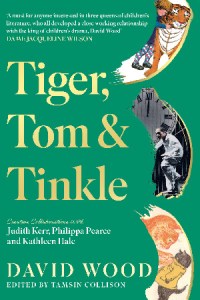 I daresay that someone down the line will write about the synergy between the children’s authors and their creations (Hale herself identified with ‘Tinkle’ the ‘naughty’ youngest daughter of Orlando). But if Tiger, Tom & Tinkle shows us anything, it’s that having the right facilitator/creative partner like Wood can distill the subliminal, magical qualities of one’s work into a tangible form.
Also, while Wood’s efforts had for the most part met with success, it’s very apparent that his greatest accomplishment as ‘the spirit of this age’ was to make all the authors feel they are part of today’s world and have more to offer. By all accounts, all the authors mentioned felt rejuvenated by having someone having faith in their life’s work, jumpstarting other creative projects. The correspondence also shows that while Wood’s responsible for the ‘nuts and bolts’ of the script development, both he and his wife Judith are equally responsible for the friendship and sense of community they brought to the authors.
© Michael Davis 2026

Tiger, Tom & Tinkle: Creative Collaborations With Judith Kerr, Philippa Pearce and Kathleen Hale is published by The Book Guild and available to buy from 28th January, price: £10.99.
 Breaking The Fourth Wall