“If you dig hard enough, there are at least three great stories in any family.” So says TV dramatist, Stephen Poliakoff. In the case of the Mitford family, this is especially true, as they had links to the Establishment and the major political movements in the first half of the 20th century – truly in the eye of the storm. Written by Amy Rosenthal and directed by Richard Beecham, The Party Girls focuses on an Oxfordshire-based aristocratic family (from the 1930s to 1960s) who all lived their lives on their own terms and for a period at least, didn’t suffer any personal consequences.

Of the seven siblings who cut a swathe through society (and the tabloid press) as the ‘bright young things’, only five are present in the play: Nancy (Kirsty Besterman) – the eldest and the first to make a living as a novelist; Diana (Elisabeth Dermot Walsh) who is romantically involved with Oswald Mosley, the leader of the British Union of Fascists; Unity (Ell Potter), besotted with Hitler and actually meets with him socially on occasion; Jessica (Emma Noakes) the most empathetic sibling, who in contrast to Unity and Diana, firmly believes in communism and that there is inequality in society and finally Deborah (Flora Spencer-Longhurst) who when we first meet her is in her early adolescence.
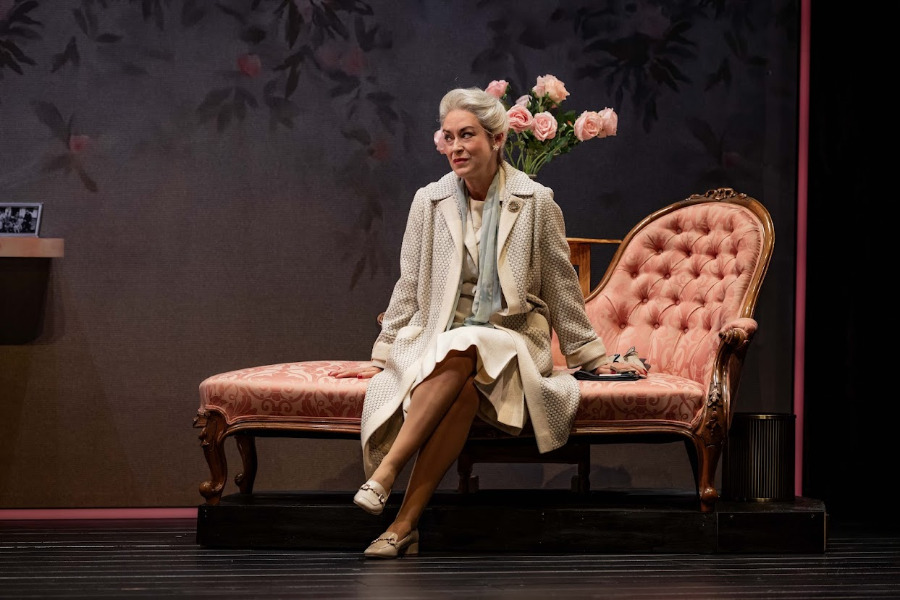
With their disparate political opinions and life experiences, the Milford siblings were probably a subliminal influence on JB Priestley’s Time and the Conways. Even so, most people will relate to having family members who they share little in common with, and when they do ‘have to’ go family gatherings, they either have to keep quiet or get into arguments. Also, like many families, the Mitford sisters in the play have pet/nicknames for each other and are rarely addressed by their true nomenclatures, so Jessica is referred to as ‘Decca’, Deborah as ‘Debo’ and so on. But I digress.
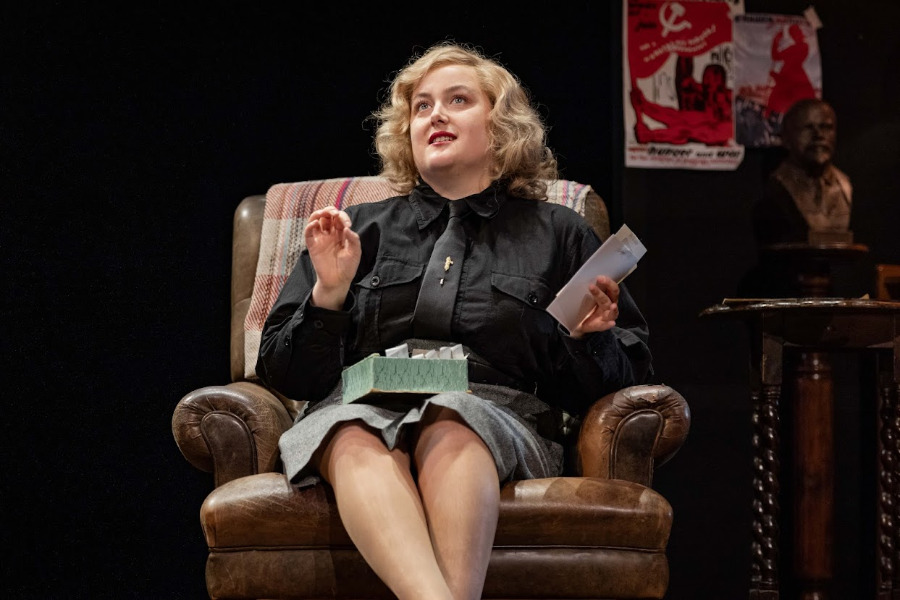
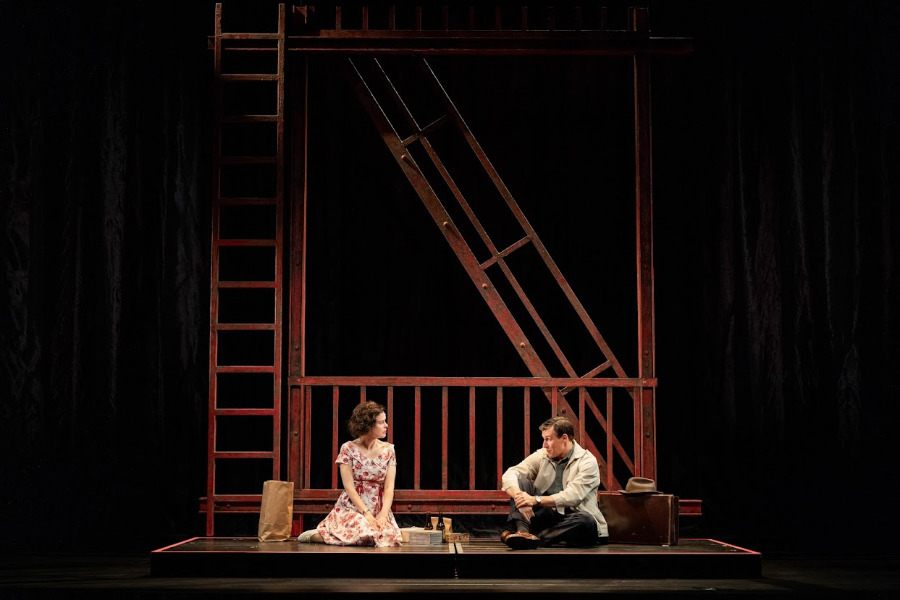
Just as the events in Time and the Conways are seen through the POV of ‘Kay’, in The Party Girls the central character of Jessica is the barometer of social and political awareness. Marrying Winston Churchill’s nephew Esmond Romilly, who shares her own political views, Jessica is sadly widowed after Romilly is missing in action, following a bombing raid over Nazi Germany. Left with a baby daughter to raise on her own, Jessica goes through the motions of her life in Washington D.C., and contrary to the expectations of everyone she knows, hopes that her husband will miraculously come back to her… But even though emotionally she’s not ready to ‘move on’, Jessica’s friendship with local lawyer Bob Treuhaft (Joe Coen) coaxes her, in spite of her resistance, to enjoy life again…

The chemistry that Coen and Noakes have together as their respective characters is the bright centre of the play, with characters you can root for unconditionally – the world of Downton Abbey colliding with the chutzpah of the multicultural Big Apple. Through her discourse with her own sisters and Treuhaft, between the lines we see that Jessica has always felt the need for an ‘ascetic’ existence – not only in terms of turning her back on her wealth, but also in terms of personal happiness. Did she have any right to be content, when so many in the world have suffered, even after the end of the Second World War?
The analogy of Downton Abbey is a fair comparison, when referring to the Mitford sisters. If parallels can be drawn between Downton’s ‘Lady Sybil’ and Jessica, Nancy as the oldest Mitford sister represents a happy compromise between accepting oneself and the ‘extremities’ of the other siblings. While much can be inferred about Nancy’s preoccupation with 18th century monarchs, her pragmatic views on money and purchasing quality clothes that can last years shows her to be relatively well-adjusted (at least on financial matters).

At times, the tone of The Party Girls is ‘too light-hearted’ for my taste – belying the serious nature of the topics broached in the play. However, it could be argued that much of the ‘frivolous’ quips that Unity and Diana make about Hitler and fascism serve to show at best, the characters’ immaturity on such matters or at worst, how many within the British Establishment (including Edward VIII and Wallis Simpson) had Nazi sympathies and were facilitating efforts for a coup d’état, to make Britain a puppet Nazi state (like the Vichy French government) before the Second World War was inevitable.

In any case, the third act does bring everything into sharp focus, when we meet the middle-aged siblings. By this time they have ‘reached full maturity’ and are fully entrenched in their social and political opinions… for better or worse. Hats off to Dermot Walsh’s acting chops for conveying convincingly the erudite, yet unrepentant and chilling side of those who ‘rationally’ justify antisemitism, the denial of the Holocaust and fascism in general. They resolutely stick to ‘their truth’, because if they don’t, they’ll fare no better than those sentenced at the Nuremberg trials…
© Michael Davis 2025
The Party Girls runs at the Birmingham Rep from 6th to 11th October.
https://www.birmingham-rep.co.uk/whats-on/the-party-girls-2025/
 Breaking The Fourth Wall