Early May marked the 80th anniversary of the end of the Second World War in Europe, and most mentions of this in the media have been ‘celebratory’ in nature (as opposed to a time for reflection). But beyond the big battles and the sacrifices made by those serving in the armed forces, there are innumerable tales regarding the ‘ordinary people’ of that time, and the hardships they faced (from without and within). So how do we convey these events to a young audience who may have a limited knowledge of the 1940s?

Written by Patrick Hayes and directed by Marcus Fernando, All My Pretty Ones begins with three medical students who are trekking to the south of France: Marie Christine (Katie Cannon), Miriam (Alice Orlik) and Steve (Talyaan Pambou). After getting on the wrong train, the trio find themselves in a railway station that is in the opposite direction of where they should be. But a chance encounter with Maurice (Andrew Callum), the enigmatic proprietor of a guesthouse in nearby Oradour-sur-Glane, ends up being a catalyst for numerous revelations, as well as a collective journey down memory lane.
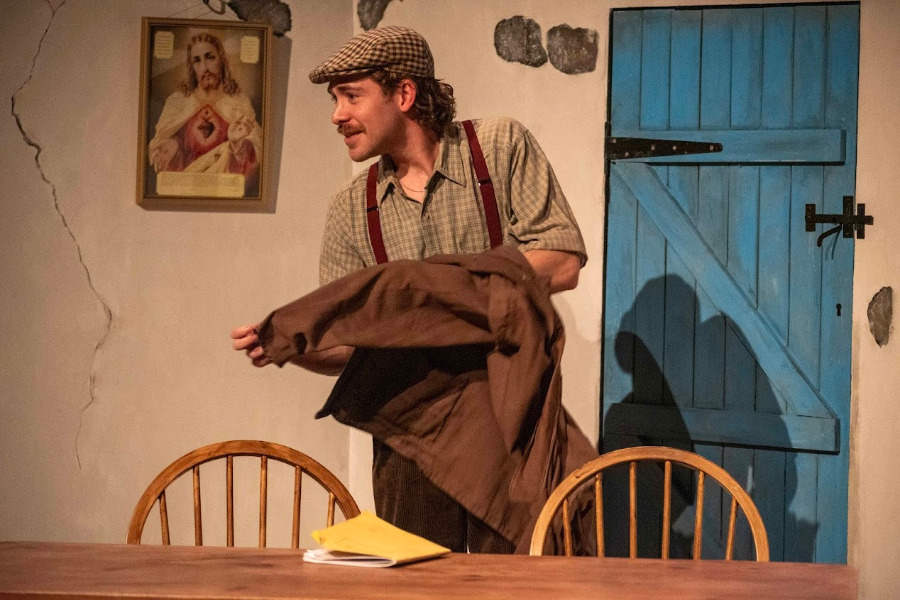
Without giving too much away, there is a JB Priestley-esque connection between the medical students and the guesthouse they’ve been brought to. While the village of Oradour-sur-Glane appears quiet and deserted, the dark events that once took place there are almost palpable to the visitors. And over the course of their stay at Chez Maurice, the medical students learn about the family that lived at the guesthouse during the aftermath of the Normandy landings and the reprisals…
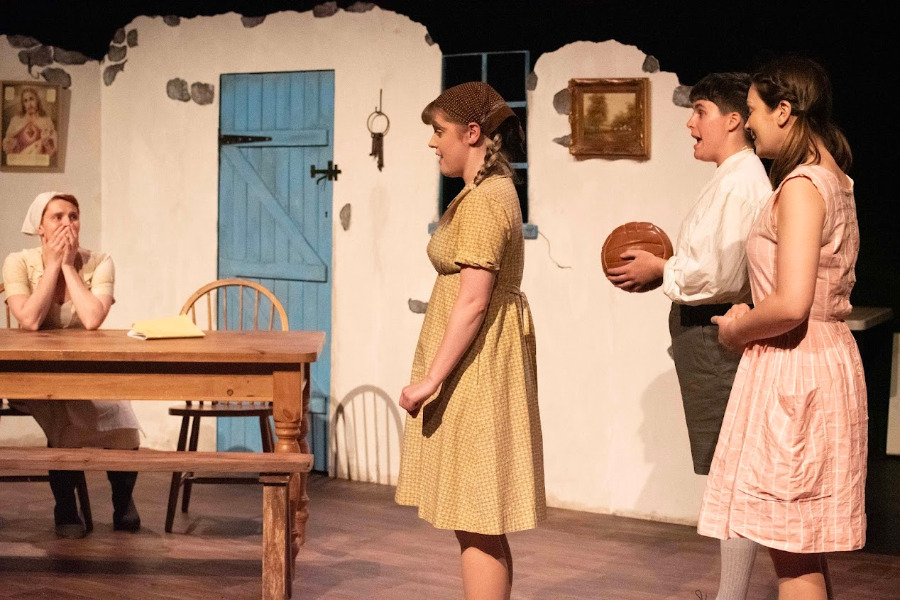
The play alternates between the discoveries of the present and the events of 1944. And it is in the past that we meet the majority of the play’s cast. Pierre (Clement James) and Aurélie (Bryony Tebbutt) run a farm, accompanied by their children Claudine (Annalise Morgan) and Lucien (Amara Latchford) and Monique (Leah Fennell).
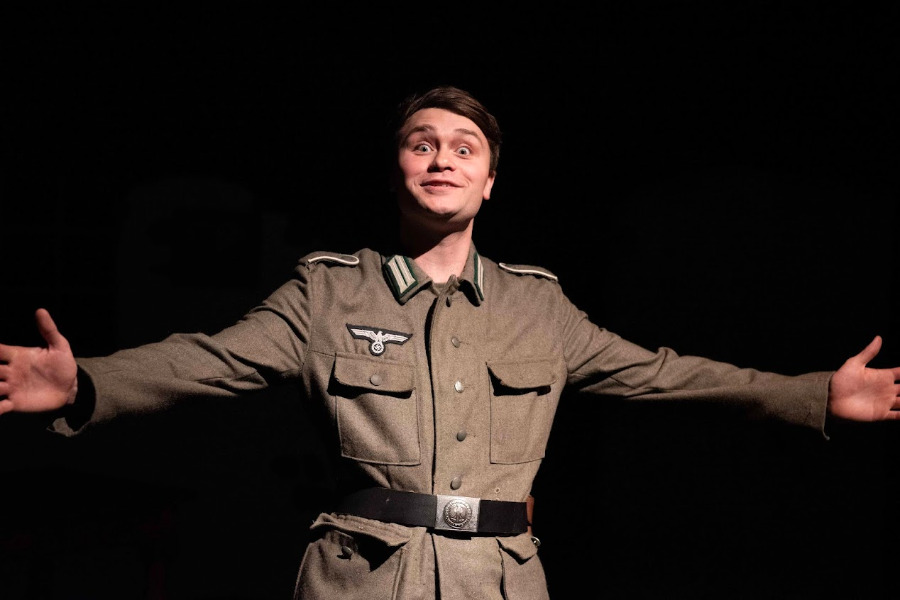
While Lucien is obsessed with playing football, it proves to be a positive pastime, as it helps him to to bond with Hans (Giles Whorton), a young German soldier who frequents the area. Hans’s actions show him to be kind and considerate, and not at all cruel like the reputation of SS officers.
Many French citizens during the occupation listened to the BBC on radios, for news from Charles de Gaulle and the Free French government exiled in London. Within the play, Pierre refers to his radio as his ‘box of delights’ (a reference to John Masefield’s children’s book), but as far as the Third Reich is concerned, it’s contraband equipment. This being the case, Pierre keeps it hidden away, though his children are less careful about talking about the broadcasts on the BBC…
While it’s not verbalised, we can tell Pierre is uneasy with Lucien’s ‘friendship’ with Hans. Asides from being worried that Lucien will ‘let something slip’ that would endanger them all, it makes it harder for Pierre to think all German soldiers as ‘bad’ and not to be trusted. At the same time, Pierre could also be ‘mistaken’ by others as a Vichy supporter if he’s seen outside to be friendly and ‘cooperating’ with Hans. Not that his children are mindful of such considerations…
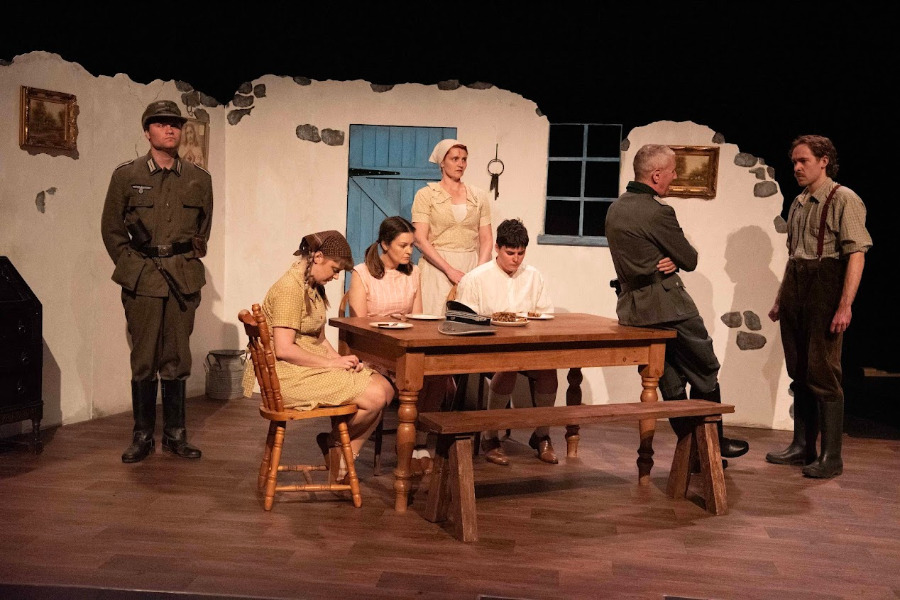
In many ways the medical students are the simulacra of the young audience, who may know a little about the past, but still have plenty of questions or ‘haven’t connected all the dots’. For ‘my money though’, the heart of the play lies with the French family and how the parents try to maintain a sense of stability and normality for their children, while tensions are rife with the German occupation.
At this juncture, I must mention that one doesn’t normally hear actors speak in another language on stage. However, Greg Hobbs (who plays Major Diekman) does an excellent job of speaking and acting in German, lending his character a natural air of authority. French is also spoken in the play – a rarity to find a British stage production that takes such pains in the quest for authenticity.
It goes without saying that for anyone au fait (or with more than a passing knowledge) of the events of the Second World War, they would be able to pick up on the significance of certain things shown and mentioned. However, as an exercise in relating the forgotten chapters of the Second World War to a young audience, the play does convey the past in a way that is engaging and educational to those unfamilar with it.
© Michael Davis 2025

All My Pretty Ones ran at The Door studio theatre at the Birmingham Rep from 14th to 17th May
 Breaking The Fourth Wall