Now there are no games
To only pass the time
No more electric trains
No more trees to climb
But thinkin’ young and growin’ older is no sin
And I can play the game of life to win
“Goin’ Back” by Gerry Goffin and Carole King (1966).
________________________________________________________
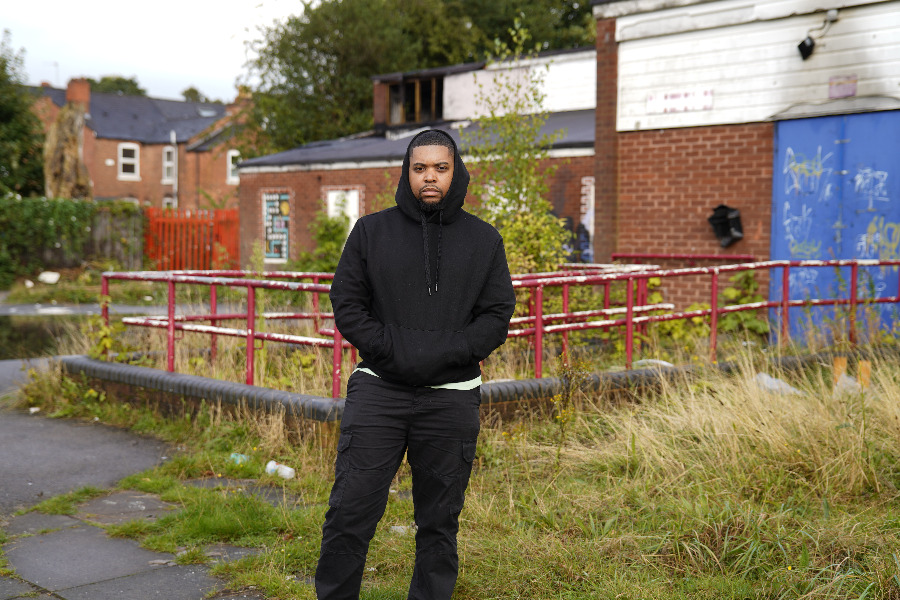
The literal meaning of the word nostalgia is the bittersweet desire to return to a former place and time in one’s life – the place of one’s origin. However, this paradoxical pleasure and sadness exerts such a strong pull on the heartstrings precisely because it can never happen. Making sense of the past is a familiar theme in narratives, especially with one’s own history and more often than not, where we lived in our formative years plays a big part of this. In Lyndhurst Memories – CJ Lloyd Webley’s latest project – he looks back at his school days; the play area near where he lived in Erdington, Birmingham; and how friends, community and sense of his place in the world were once inextricably linked.

Lyndhurst Memories is an ensemble piece with Yasmin Dawes, Mathias André, Loretta Thompson, Ibrahim Ibrahim, Cory McClane and Webley performing as residents of the local housing estate. Rather than performing himself as an ‘adult’ or looking back as an omniscient narrator who contextualises the past, Webley plays his teenage self who obviously doesn’t have the benefit of hindsight. While there are some scenes with the ‘adult’ and ‘teenage’ characters together, for the most part their scenes are separate – with each group having a different perspective on the neighbourhood and its inherent dangers. It is then left to the audience to discern why we are shown specific scenes.
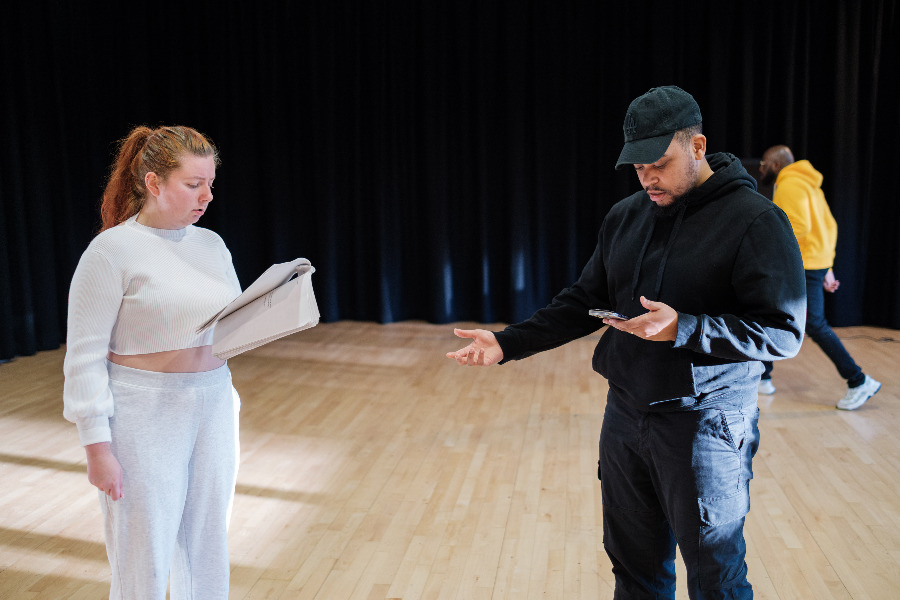
From the word go, it is evident in the show that sports and physical activities play a large part of the young lives who live on the Lyndhurst estate. Obliquely, one can see this is encouraged by Webley’s mother who herself is physically active – playing netball competitively (even at an internationally level), and involved in many other events and good causes locally.
The children/teenagers feel the local play area is ‘their’ space and are safe. But when ‘unwelcome visitors’ make an appearance in the neighbourhood, one adult in particular takes matters into his own hands so that the area has ‘natural surveillance’. Not that the reasons for creating greater visibility in the play area are explained to Webley’s younger self… But if ‘young’ Webley thought that the removal of the tree and the posts in the play area was ‘disastrous’, it’s nothing compared to imminent exodus of the families in the neighbourhood…

Lyndhurst Memories includes many personal anecdotes, plus observations about the assorted characters in B23. But it is in the community consultation meetings (and their offshoot scenes) where we have a sense of the ‘bigger picture’ of what was happening in Erdington and inner-city communities throughout the UK.
The references to other specific areas in Birmingham such as Castle Vale and Nechells sets the show apart from other narratives that reference the city – even from the likes of Peaky Blinders. This geographical specificity lends to the production a sense of authenticity.
But even without having prior knowledge of the areas referenced, the issues raised regarding urban renewal, lack of facilities for young people and resident relocation are pertinent to all major UK cities. There’s a certain irony that even in London, a percentage of residents are moved to Birmingham, Liverpool and further afield, with no immediate indication that this policy will end soon.
Lyndhurst Memories is also the only show in any medium to discuss Margaret Thatcher’s Right to Buy [council housing] policy and the long-term consequences of this for working class families (for those who did AND didn’t buy), plus society as a whole.
While Lyndhurst Memories covers a lot of ground and is well-conceived, there is plenty of scope to build upon the themes covered, and expand upon the personal anecdotes, as well as the sociological insights.
Following the show, the audience is encouraged to visit the virtual reality area in a separate room where interviews with residents and other people linked to the Lyndhurst community can be watched and listened to. This complementary activity recreates key landmarks and offers an opportunity for the audience to have a degree of interactivity with what they’ve seen – to ‘relive’, recapture and immerse themselves in reimagined spaces and the stories linked to them.
© Michael Davis 2025
A work-in-progress performance of Lyndhurst Memories took place at the Midlands Arts Centre on 22nd March.
 Breaking The Fourth Wall