The world of classical music – particularly in the second half of the 19th century – had more than its fair share of musical rivalries. But what if the tensions were between… a husband and wife? Written by Claire Novello and directed by Kenneth Michaels, The Dedication begins in 1902 in Vienna. At such a time, many ‘modern’ movements were gaining traction – the women’s right’s movement, the nascent field of psychology, as well as ‘modern’ painting (as exemplified in this play by the likes of Egon Schiele and the Symbolist Gustav Klimt). But it is another ‘Gustav’ – the composer Mahler (Stephen Riddle) – who like a celestial body, affects everyone within his orbit…
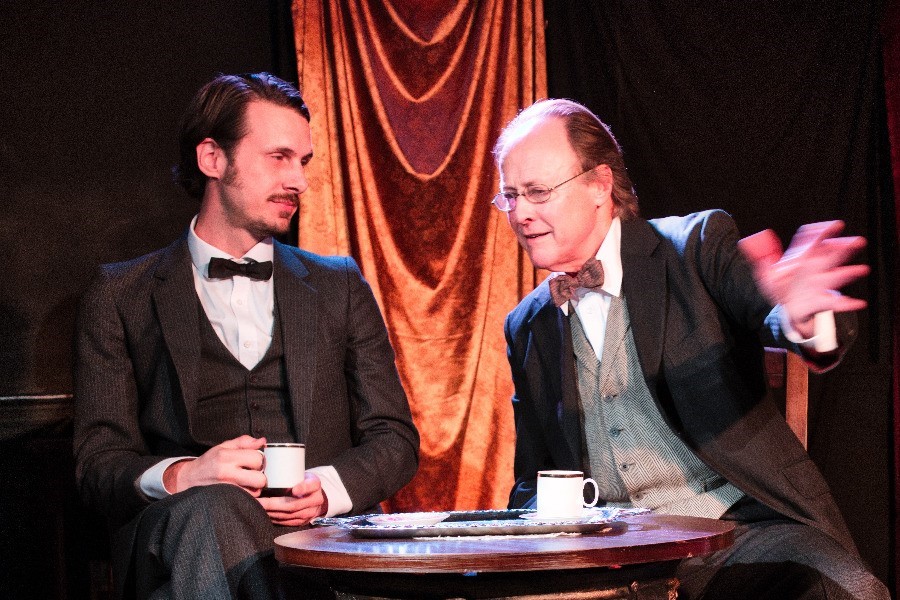
But while Mahler is an important figure in the play, The Dedication is truly the story of Alma Schindler (Rebecca Bugeja), and what happens to a young woman – even one as talented as her, with ‘prospects’ – who allows her own personal happiness to play ‘second fiddle’ to keeping her husband happy.
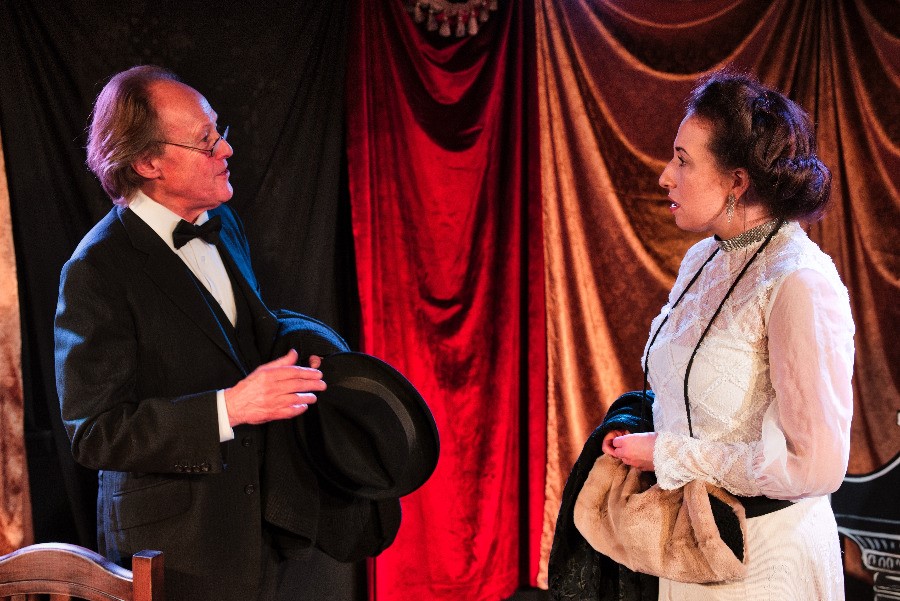
When we’re introduced to Alma, she is a young woman in Vienna who has an aptitude for composing [classical] music. Her musical mentor Alexander Zemlinsky (Simon Brandon) gives her encouragement, and in different circumstances they might have had a life together as man and wife, with Alma at the vanguard as a female composer. But Alma’s mother Anna (Amanda Bailey) has her sights set on introducing her gifted daughter to Vienna’s star composer. In spite of her own reservations, Alma and Mahler do meet and ‘hit it off’ – leaving Alma with several ‘impossible’ decisions to make…
The Dedication may be set at a time when Freud, Klimt and Mahler were prominent, but for a large proportion of the play, the world and the choices available are seen through the female characters’ eyes. The prospect of Alma marrying Mahler is a double-edged sword, as she’s been told in no uncertain terms that she has to sacrifice her burgeoning career as a composer so that it doesn’t ‘interfere’ with his. This is doubly tragic, as many people – men and women – don’t have the self-knowledge to know what they really want to do in life or if they do, lack the opportunity and means to pursue it.
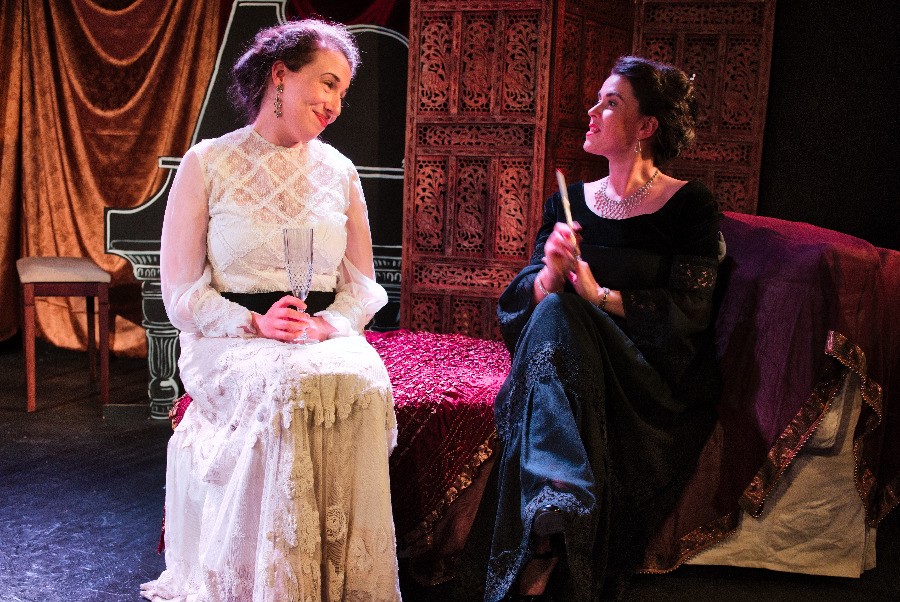
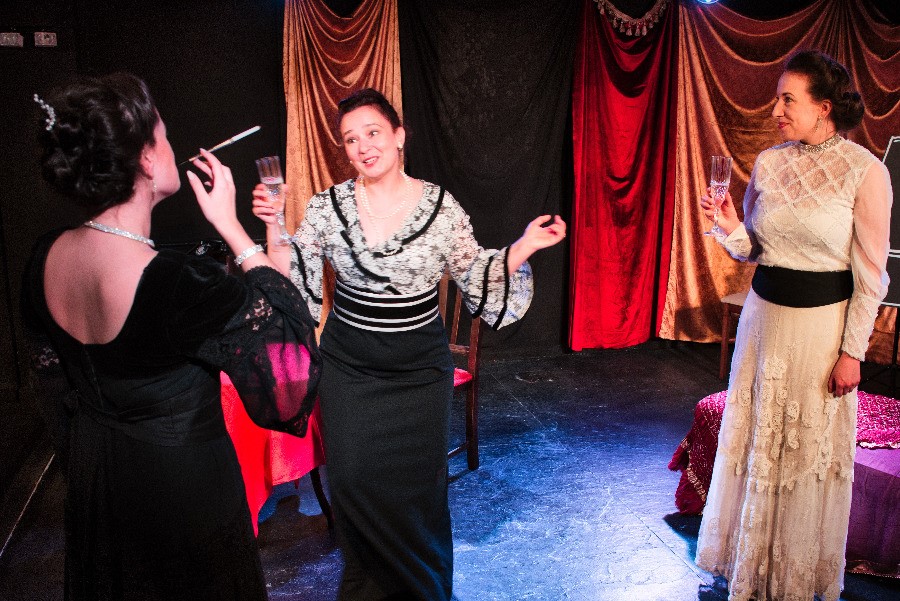
As a counterpoint to Alma, we meet two women who are her contemporaries and in some ways, could be ‘her’ under different circumstances. Both are played by Emma Riches, but are as different as can be. Firstly there’s Adele Bloch-Bauer – a socialite in Viennese society who at the age of 18, marries someone more than twice her age. With no artistic pursuits of her own, she settles for being a model for Klimt – while her only real ‘pleasure’ is chain smoking through her long, gold cigarette holder. Then there is Anna von Mildenburg, an opera singer who has a ‘shared history’ with Mahler. She is a reminder that nothing lasts forever and there is always the potential for someone one else to be ‘special’ in Mahler’s heart. Incidently, the ‘fan face-off’ between von Mildenburg and Alma is a comical high-point of the play!
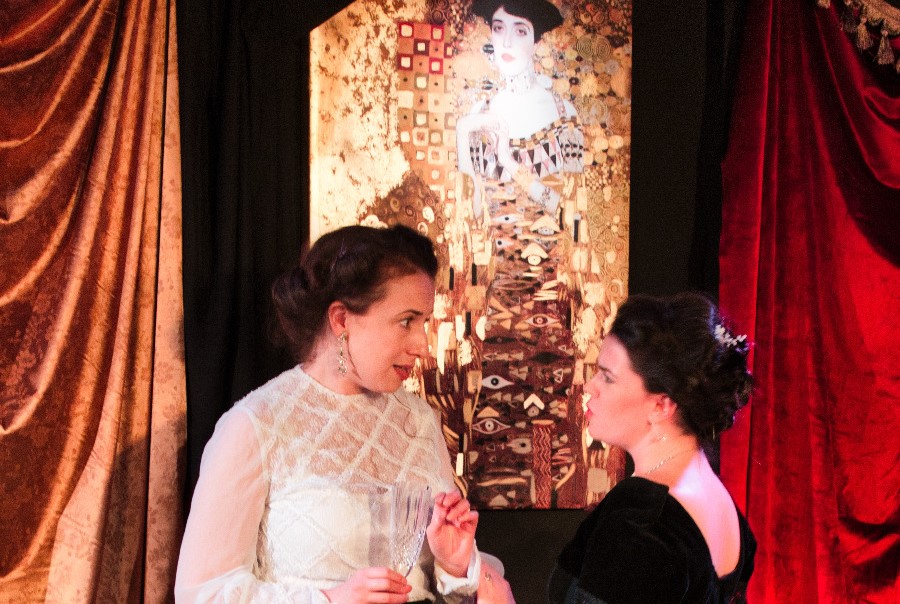
But if Alma’s mother Anna doesn’t appear to be interested in anything, apart from being a matchmaker – a sentiment that’s shared with her friend and socialite Bertha Zuckerkandl (Orsolya Nagy) – then Rosa Mayreder (also played by Bailey) gives Alma pause for thought. As an advocate for women’s rights, Mayreder is a reminder to Alma that a) women don’t have to settle for their ‘lot in life’ and b) happiness and fulfilment aren’t rights that are given to you – they have to be fought for.

This all brings us to the pivotal figure in the show – Mahler. As Gustav, Riddle’s Mahler in the play doesn’t give off an air of being an alpha maestro. Instead he possesses more of a ‘childlike’ disposition, who feels ‘life just happens to him’ (at least with regards to relationships). In truth, certain characters do their level best to ‘introduce’ him to women and in today’s ‘enlightened world, we would say that he was ‘enabled’ by his peers to think and behave as he does. Repeatedly in the play, Mahler asserts that his calling to music transcends other concerns and attachments, but again by today’s standards, there is a marked difference between the achievements and sensitivity of Mahler the artist and Mahler the man, husband, father…
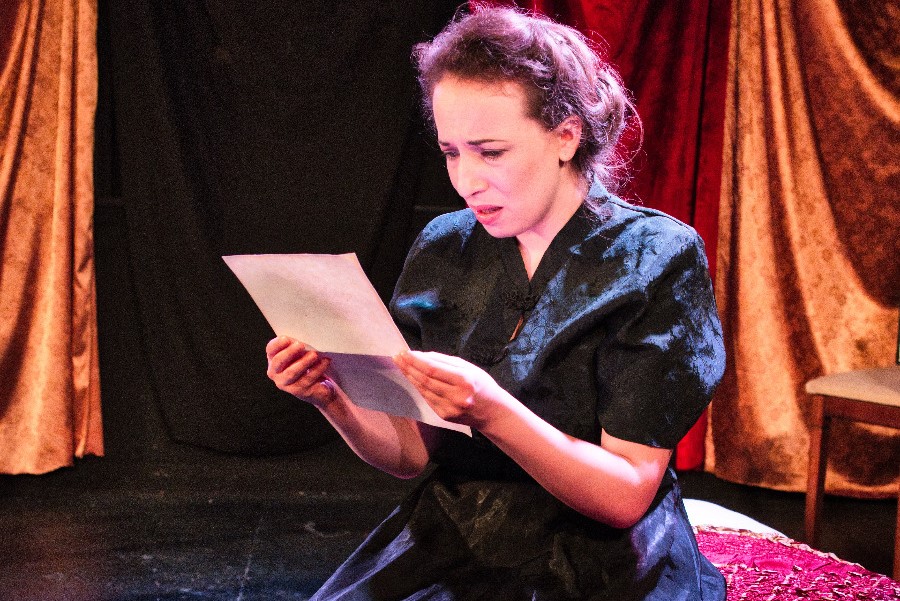
Novello interweaves lots of details from the era that all have a bearing on the thoughts and influences on Alma and Gustav. One can argue that the values and opinions of the audience determines what judgements are made about the central characters. Be that as it may, one only has look at their respective circumstances to see how much has changed in the past 120+ years – and how little…
© Michael Davis 2024

The Dedication runs at the White Bear Theatre until 12th October.
https://www.whitebeartheatre.co.uk/whatson/the-dedication
 Breaking The Fourth Wall