As a writer, producer and performer, Harriet Madeley has made an invaluable contribution to theatre projects based on true stories. Her new show OUTPATIENT takes a different tack, being a solo show and semi-autobiographical in nature. I recently caught up with Harriet to talk about OUTPATIENT and what makes it so special.

The Edinburgh Festival Fringe has a plethora of shows on offer. What sets OUTPATIENT apart from the rest and what can audiences look forward to when they watch the show?
OUTPATIENT is a dark comedy about the fantasies of human minds and the fragility of human bodies. I suppose what sets it apart is its tone: it’s about something very serious, and emotive, whilst being utterly ridiculous throughout. The story is based very closely on what happened to me when I was diagnosed with Primary Sclerosing Cholangitis, so it’s deeply personal; at the same time, it’s about the universal reality that we’re all going to die at some point.
OUTPATIENT is at times very funny, but its humour is all organic – stemming from the awkwardness of some situations. It seems ‘effortless’, but I would imagine that tonally, it took some time to crack…

It definitely did! I always knew I wanted to come at the story with humour – not least because my memory of these situations was dominated by absurd comedy – but it took me a while to understand how to pitch the character; how far from myself to place her, if that makes sense.
Were there any conscious influences on the structure and themes of the play (apart from one’s own experiences)?
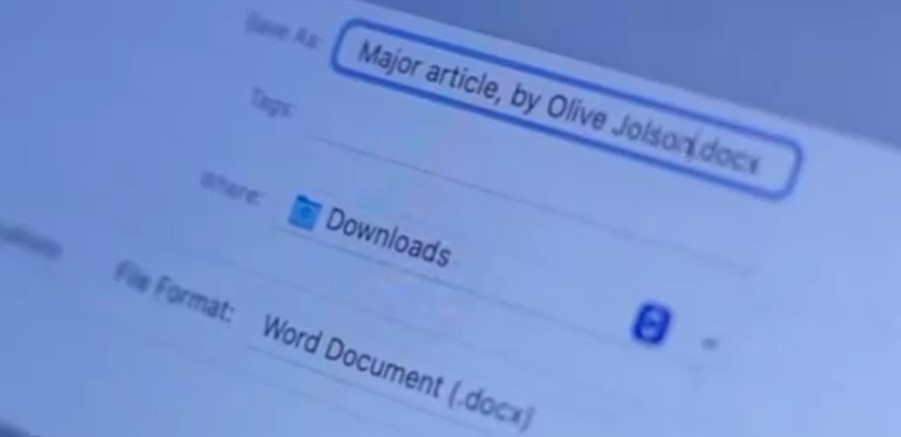
A major theme is self-obsession: how it’s fuelled by the capitalist world that we live in, and how that links into the human fear of death. This is explored via Olive’s actions throughout the play, but also by her developing relationship with Google, who winds up (against all odds) encouraging her to release her ego.
OUTPATIENT is semi-autobiographical. How has the writing process been cathartic, and do you think the live performances will bring further personal insights?
The process was daunting at first, because I hadn’t really processed what had happened to me. Honestly, I don’t know if I will ever fully process it – because this disease is an ongoing situation in my life – but the writing process was very cathartic. There’s something very rich about creatively exploring personal experience. I think the live performances will also be quite liberating: in a sense, the whole project is about vanquishing shame; about allowing yourself to be seen in all your ugliness.

One thing that the play touches on (that’s acknowledged by people diagnosed with life-threatening conditions) is most stress stems from the reactions of one’s social circle… The character of Iona very much epitomises the self-centred, who feel those who are dying should make THEM feel better, while at the other end of the spectrum, characters like Olive’s fiancée (Tess) jacks in all her commitments to be with her (which feels a bit overwhelming). In truth, until it happens to you, you don’t know how you really feel…
Yeah, the research I did for the initial project suggested that people with life limiting conditions spend more time worrying about the impact on their loved ones than they do about themselves. I think if you’re someone that naturally gravitates towards other people at moments of crisis, it might make it easier to handle other people’s reactions or view them with more sympathy… but for me, I found instinctively that I wanted to run away from everyone – and so these sorts of reactions were unbearable.
One of the common tropes of people facing death or knowing they are living on ‘borrowed time’ is ‘carpe diem’ – living life to the full and working through one’s private ‘bucket list’. Without going into specifics, are there any other positive developments that the play touches on?
I think that idea can mean a few different things. Olive becomes obsessed by the idea that she needs to have as many new experiences as possible… which is similar to the bucket list I suppose, and in many respects is a positive idea. For Olive, there is a cost to this though – in aggressively embracing new things, she sidelines everything she already has, and runs away from her life.

The parents in the play are quite logical and relatively unperturbed by Olive’s ‘change of circumstances’ (though beneath the surface may be a different story)… One could argue that Olive has internalised a lot of their ‘academic’, detached outlook on death, without letting it sink in on an emotional level…
Yes, I think she’s internalised the idea that she needs to be very independent in her reactions, and also that work is the most important thing. This is something I definitely relate to… although I’m very close to my parents, so I feel a little bad about the emotionally stunted parents conveyed in the play.
Making Tess (Olive’s fiancée) a war correspondent is an inspired choice. Many seasoned examples (such as the late Marie Colvin) have early in their careers departmentalised their fear so that they can get on with the job at hand. But staring death in the face day-in, day-out takes its toll, leading to PTSD – or at the very least unresolved issues regarding their ‘vocation’ versus ‘relationships’ in general…
The idea of departmentalising is very interesting. I think Tess has a definitely has a tendency to put all her pain in a box whilst looking after others – that’s a skill she maybe developed while working in those environments. This means that when her pain finally bursts to the surface, it’s so big that she’s unable to cope with it.

The play is very quotable. I particularly like the segments such as: “They say you can’t do anything about the length of your life, but you can do something about its depth.” Also, the incorporation of Victorian attitudes to sex and death are a nice contrast, and it’s quite insightful the way that movies and TV programmes are saturated with zombies and vampires in our secular society.

Thanks! The play has been helped along by all the research I did for an initial play about death and dying. I worked with some brilliant palliative care doctors, Mark Taubert and Idris Baker, who brought many of these insights.
The play repeatedly features the ‘Voice of Google’. In my head, this sounds like the electronic voice of Stephen Hawking. Of course, Hawking himself is a good analogy for what Olive is going through –initially given a short span of time to live, but with the right care/love in his life, ended up living a rich life (albeit not without difficulty at times)…
Yeah interesting. As I understand it, Hawking well surpassed the expectations of his prognosis, but for Olive (who gets her medical information from Google initially), there’s some confusion about what she’s supposed to expect. We are thinking of an automated voice for Google – I like the way it’s working because there’s an assumed coldness to the voice at first, but once you listen more carefully to the content of it, it’s wiser than Olive in many ways.

Evelyn is an important figure in OUTPATIENT and in many ways has a greater influence on Olive than anyone else in the play. In your own words, explain the significance of Evelyn in Olive’s life.
Evelyn is a charismatic woman in her fifties who has been diagnosed with terminal ovarian cancer and is determined to live out the remainder of her days as she wants. Olive admires her tenacity and independence, and becomes obsessed with spending time with her – there’s an irony there of course, as they both claim to be seeking independence. In many ways, Evelyn is a cipher for Olive – she sees the wildest and most exciting parts of herself in her.

Running as a motif features prominently in the play. Is it a metaphor or something much more profound?
Yes, there’s quite a lot of literal running in the story of the play and there’s a treadmill on stage throughout. In terms of its metaphorical significance, I think it can mean a few different things to different people. Olive is definitely trying to escape the reality of her situation throughout the play – to outrun death; to run away from the people who care about her, etc – and I think there’s something in the image of her running incredibly fast without getting anywhere.

You don’t shy away from the meta aspects of OUTPATIENT (especially with the way they bookend the play, which are also very funny). What do you think ‘Olive’ would make of the show?
Very interesting question! I think she’d be pleased that lots of people are coming to watch her story, but she might be quite alarmed at how she comes across! I wouldn’t say Olive is a queen of self-awareness…
© Harriet Madeley / Michael Davis 2024
Where to watch OUTPATIENT (Pre-Edinbugh Previews):
Reading Rep, 22nd & 23rd July, 7:30pm
St John’s Gosport, 24th July, 7:30pm
Omnibus Theatre, London, 26th July, 7:30pm
Edinburgh premiere:
Anatomy Lecture Theatre, Summerhall,
2nd – 26th August, 10:30am
Bookings for all performances can be made here: http://www.crowdedroom.org.uk/outpatient.html
 Breaking The Fourth Wall