Narratives involving the learning curve of young doctors are a perennial favourite – less about the treatment of disease than the human condition. In the case of The Wind and the Rain, the play’s protagonist has his mind opened by the world of science and medicine, but it is the emotional growth in matters of the heart that is the making of him and where his true ‘education’ lies…

Written by Merton Hodge and directed by Geoffrey Beevers, The Wind and the Rain was first performed 90 years ago and an international hit in its day. The Finborough production marks its first revival in the UK since the 1930s. Anyway, the play is set at the lodgings of Mrs McFie (Jennie Lee) for undergraduates who are training at the Royal College of Surgeons of Edinburgh.

The reception of Charles Tritton (Joe Pitts) at Mrs McFie’s is a mixed affair; John (Harvey Cole) is cordial, but Gilbert (Mark Lawrence) is much ‘cooler’ towards Charles, thinking him unworthy of his attention (for the time being at least). Meanwhile, graduate Dr Paul Duhamel (David Furlough) who continues to stay at Mrs McFie’s, proves to be a source of sage advice – if a little mysterious at at times – and indirectly through him, Charles meets Anne Hargreaves (Naomi Preston-Low).

A sculptor from New Zealand, Anne is in many ways the antithesis of Charles. Living independently, Anne doesn’t have a close relationsip with her mother. And as fond as she is of Charles, we get the impression she doesn’t ‘need’ Charles as much as he ‘needs’ her… While it isn’t overtly alluded to, we also sense she has had a bad history with Gilbert.
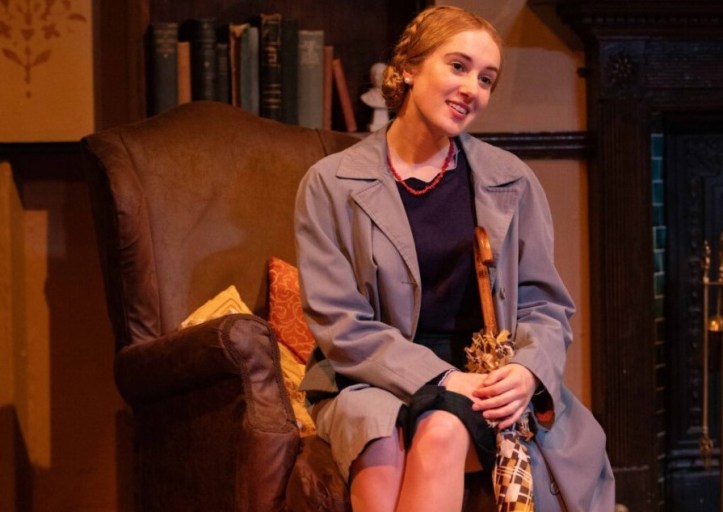
While not as affluent as Gilbert, Charles’ mother owns a shop on fashionable Sloane Street. Also, Charles’s experience of women revolves around his mother and Jill (Helen Reuben), who while raised as his ‘sister’, it is ‘understood’ that they will eventually be ‘betrothed’. Perhaps at a subsconscious level, this is why he decided to leave ‘the bosom of his family’ in the first place to train to be a doctor – to see how he would fare on his own two feet.
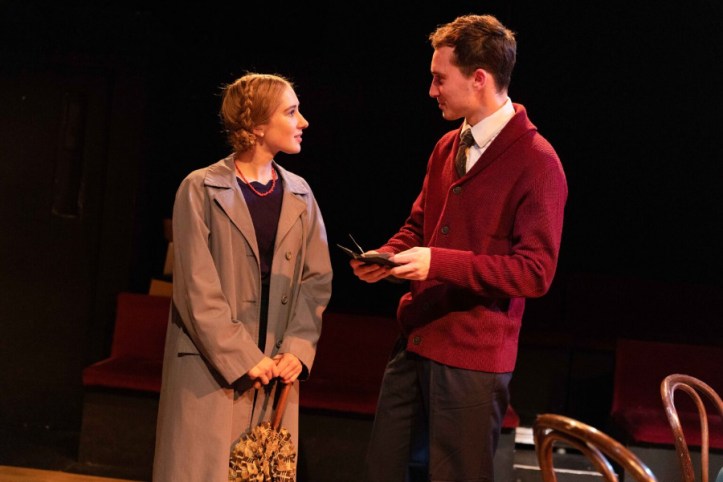
In Tennessee Williams’ hands, Charles’s familial circumstances would have set him apart like the voracious ‘Sebastian’ in Suddenly Last Summer or as the struggling, but worldly-wise ‘Tom’ in The Glass Menagerie. Here though, Charles is the well-meaning, if naive, neophyte in matters of the heart and finds his notions of what’s right for him are turned on their head. Perhaps he and Gilbert aren’t so different after all… In contrast, fellow lodger Paul is very much his own person, but he doesn’t tell everyone his plans or everything that he is thinking. It’s also possible that his abrupt disappearence is to avoid Anne or to bring her and Charles together…
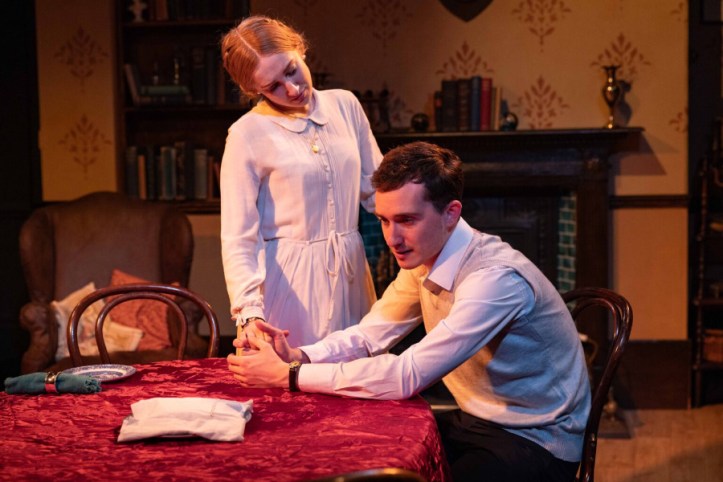
Hearing Charles speak so lovingly of Jill and his mother, the audience has a mental image of what’s she’s like. However, by the time we meet her in the flesh, we doubt Charles’s way of looking at the world (if we hadn’t done so already) and wonder if he had viewed previous relationships with rose-tinted glasses.
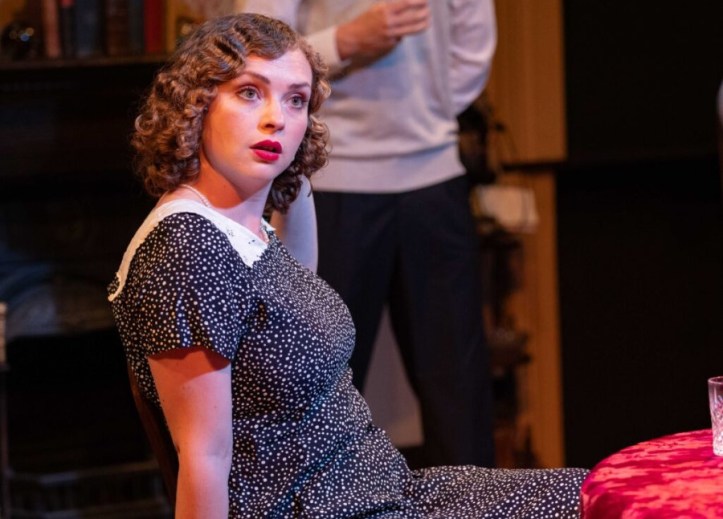
As Jill’s ‘companion’ in tow, Lynton Appleton brings light relief as the caddish Hugh Grant-esque Roger Cole – a mirror to Jill’s true nature and a catalyst for Charles’s actions later in the play. But as Polonius says in Hamlet: “To thine own self be true,” and it’s a lesson that all the characters have to grasp with – Charles in particular. Only trouble is that there are personal truths, others’ opinions and ‘never the twain shall meet’…

Before appearing as Laura Jesson in the film Brief Encounter, Celia Johnson years before played Anne in The Wind and the Rain’s original run. In some ways it’s easy to see why, as both narratives deal with finding love, miles away from one’s ‘significant other’ and debating the best course of action…
© Michael Davis 2023

The Wind and the Rain runs at Finborough Theatre until 5th August.
 Breaking The Fourth Wall